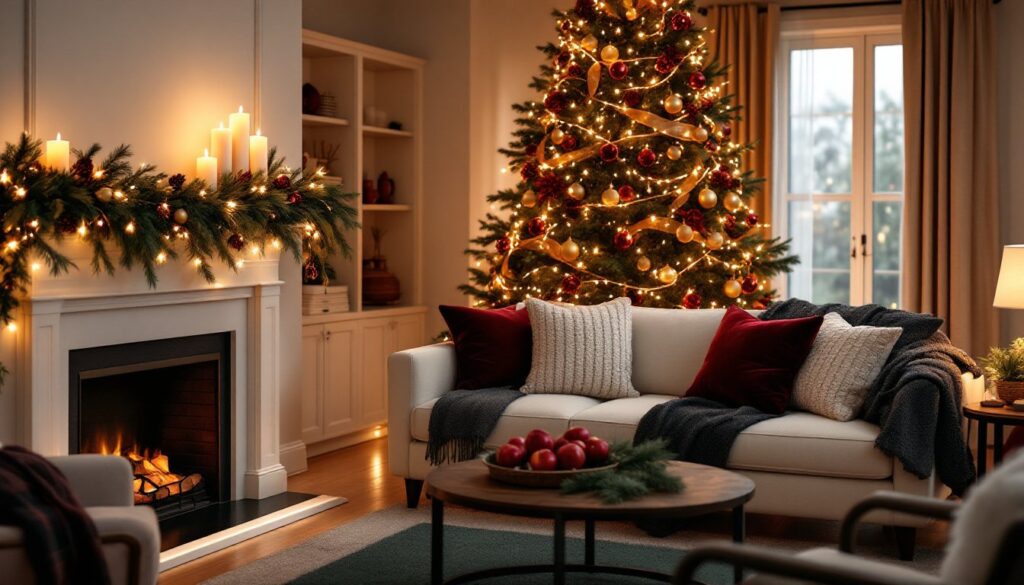
Transforming a living room into a festive holiday retreat doesn’t require a decorator’s budget or a weekend-long marathon. With the right christmas living room decor approach, layered textures, strategic lighting, and thoughtful focal points, any space can shift from everyday to extraordinary. The trick is working with what’s already there: architectural features like mantels and built-ins, existing furniture layouts, and the room’s natural light. This guide breaks down practical christmas living room decorating ideas that tackle each zone methodically, from the tree to the coffee table, so the result feels cohesive instead of cluttered.
Table of Contents
ToggleKey Takeaways
- A strong Christmas tree focal point requires 100 ornaments per vertical foot, 350–450 LED bulbs for a 7-footer, and positioning near an outlet to avoid unsafe extension cords.
- Layer your living room Christmas decor with multiple light sources including tree lights, fairy lights, lanterns, and dimmers to create depth and ambiance without harsh overhead glare.
- Transform textiles like throw pillows, blankets, and rugs in festive colors (burgundy, forest green, cream) to instantly shift the room’s warmth and cohesion.
- A well-styled mantel using 6–9-foot pre-lit garland, varied candlestick heights, and natural accents creates visual rhythm while maintaining negative space to avoid clutter.
- Incorporate fresh or artificial natural elements like evergreen branches, pinecones, and seasonal scents to ground the space and engage multiple senses during the holiday season.
- Skip overcrowding by choosing fewer, higher-impact pieces that build on existing architectural features and furniture layouts rather than filling every corner.
Create a Stunning Christmas Tree Focal Point
The tree anchors the entire room, so placement matters as much as decoration. Position it near a corner outlet to avoid extension cords snaking across traffic paths. If the ceiling height allows, choose a 7- to 9-foot artificial tree for standard 8- to 10-foot ceilings: real trees work too, but they shed and dry out faster indoors (plan on watering daily if going fresh-cut).
For ornament density, figure 100 ornaments per vertical foot of tree, a 7-footer needs roughly 700 pieces, mixing ball ornaments, ribbon, and specialty shapes. Start with two to three 50-count LED string light sets per foot of tree height (a 7-footer takes 350 to 450 bulbs). Wrap lights from the trunk outward on each branch before adding ornaments: this creates depth instead of a flat glow.
Ribbon and garland add polish. Use wired ribbon in 2.5- to 4-inch widths: it holds shape better than satin. Tuck 15- to 20-foot lengths vertically in loose cascades, or spiral around the tree. Skip the temptation to overload the top third, weight distribution matters, especially on artificial trees with thinner upper branches. If the tree feels top-heavy, redistribute larger ornaments toward the middle and lower sections.
Tree skirts or collar baskets hide the stand and corral stray needles. A 48-inch round skirt fits most standard stands. For a cleaner look, use a galvanized or woven basket (18- to 24-inch diameter) that the stand nests inside. Anchor the tree to the wall with clear fishing line tied to a screw eye in the baseboard if there are kids or pets in the house, tip-overs happen fast.
Deck Your Mantel with Festive Greenery and Garlands
A fireplace mantel is prime real estate for christmas decor living room displays. Start with a 6- to 9-foot pre-lit garland (length depends on mantel width: measure and add 12 inches for drape on each end). Real garland, cedar, pine, or mixed noble fir, lasts about two weeks indoors if misted daily. Artificial options with built-in LEDs save time and eliminate the watering routine.
Secure garland with removable adhesive hooks (rated for 3 to 5 pounds) spaced every 18 inches along the mantel edge. Drape it asymmetrically or in a centered swag, depending on the mantel’s architecture. Layer in battery-operated fairy lights (50 to 100 bulbs) for extra glow if the garland isn’t pre-lit. Tuck the battery pack behind a candlestick or frame so it’s out of sight.
Add height variation with candlesticks, lanterns, or small wreaths propped on stands. Use pillar candles in 3-, 6-, and 9-inch heights to create a stepped visual rhythm. Battery-operated flameless candles (with timers) are safer if the fireplace is in use. Tuck in small accents, pinecones, ornament clusters, or sprigs of eucalyptus, between larger pieces. Avoid overcrowding: leave some negative space so each element reads clearly.
If there’s no mantel, a floating shelf or a console table behind the sofa works the same way. Just keep decorating techniques focused on horizontal balance and scaled proportions for the space.
Layer Cozy Textiles for a Warm Holiday Atmosphere
Textiles shift a room’s feel faster than any other decor element. Swap out everyday throw pillows for holiday-themed covers in velvet, faux fur, or cable knit, no need to buy all-new inserts: slip covers over existing 18×18-inch or 20×20-inch pillow forms. Mix three to five pillows per seating area, varying textures and patterns (plaid, solid, and a small-scale print) to avoid a flat, matchy look.
Throw blankets belong on every sofa and armchair. Choose 50×60-inch or 60×80-inch throws in chunky knit, sherpa, or brushed fleece. Drape them loosely over the arm or fold and stack on an ottoman. Warmer tones, burgundy, forest green, cream, or charcoal, read as festive without screaming “Christmas” and can transition into January without looking out of place.
If the room has hardwood or tile floors, add a seasonal area rug. A 5×7-foot or 8×10-foot low-pile rug in red, green, or neutral with a subtle pattern anchors furniture groupings and muffles foot traffic. Rug pads (1/4-inch felt-rubber blend) prevent slipping and extend the rug’s life. Layering a smaller accent rug over an existing larger rug works too, just make sure edges don’t create a trip hazard.
Window treatments matter for ambiance. Swap lightweight curtains for thermal-backed or velvet panels if the room feels drafty: they also block early-evening darkness and create a cozier backdrop for interior lighting. Simple decorating strategies like layering textiles make a measurable difference in how warm a space feels, even before adjusting the thermostat.
Add Twinkling Lights Beyond the Tree
Lighting sets the mood, and christmas living room decorating ideas lean heavily on layered light sources. String lights aren’t just for the tree, drape 20- to 50-foot strands of warm white LEDs along window frames, around doorways, or across open shelving. Use clear adhesive clips (rated for painted surfaces) every 12 inches to keep lines straight and prevent sagging.
For mantels and shelving, battery-operated copper wire fairy lights (10- to 20-foot lengths with 100 micro-LEDs) weave into garland, around picture frames, or inside glass vases without the bulk of traditional string lights. Most run 6 to 8 hours on a set of AA batteries: splurge on rechargeable batteries if planning to use them annually.
Lanterns and candle holders add ambient glow. Place 12- to 18-inch metal or wood lanterns on the hearth or flanking the sofa, fitted with pillar candles or LED votives. Group them in odd numbers (three or five) for visual interest. If there’s a side table or console, a small lamp with a warm-toned shade (40- to 60-watt equivalent LED bulb) fills in shadows and balances overhead lighting.
Dimmers make a difference. If the overhead fixture or recessed cans aren’t already on a dimmer switch, installing one is a straightforward swap (turn off the breaker first). According to design experts at The Spruce, layered lighting with multiple dimmable sources creates depth and prevents the harsh glare of a single overhead fixture. Test the lighting at dusk to see where additional sources are needed, corners and nooks often need a small plug-in accent light to feel finished.
Incorporate Natural Elements and Seasonal Scents
Natural materials bring texture and a grounded feel to christmas decor living room setups. Fill galvanized buckets or wooden crates (12- to 18-inch diameter) with fresh-cut evergreen branches, birch logs, or bundled cinnamon sticks. Real greenery lasts two to three weeks indoors if kept cool and lightly misted: artificial options skip the maintenance but lose the scent.
Pinecones are inexpensive filler. Collect them outdoors (bake at 200°F for 30 minutes to kill bugs and open the scales), or buy pre-cleaned bags at craft stores. Pile them in bowls, tuck them into garland, or wire them onto wreaths. For a frosted look, lightly brush the tips with white acrylic paint or spray adhesive and dust with Epsom salt.
Seasonal scents layer into the sensory experience. Soy or beeswax candles in pine, cinnamon, or clove scents work well, but avoid overpowering a room, one 8-ounce candle per 10×10-foot space is plenty. Simmer pots (a small saucepan on low with water, orange slices, cloves, and cinnamon sticks) fill the house with scent for hours. Avoid plug-in air fresheners if anyone in the household has fragrance sensitivities: they’re often too strong in enclosed spaces.
Bowls of fresh fruit, clementines, pomegranates, or red apples, add color and double as décor. Choose fruits with thicker skins: they’ll last a week or more at room temperature. Many popular design approaches incorporate edible elements that can be refreshed throughout the season without adding clutter.
Conclusion
Christmas living room decor works best when it builds on the room’s existing bones, architecture, furniture layout, and natural light. Focus on a strong tree, a well-styled mantel, layered textiles, and strategic lighting. Skip the impulse to fill every corner. Instead, choose fewer, higher-impact pieces that feel intentional. For anyone starting with decorating, these foundational moves create a cohesive holiday look that’s easier to assemble, adjust, and store for next year.