Building a new deck railing doesn’t have to mean weeks of construction or a contractor’s invoice. With the right materials, a few basic tools, and a solid plan, most DIYers can tackle a wood railing project in a weekend. Wood remains one of the most versatile and forgiving materials for deck railings, it’s easy to cut, adaptable to different design styles, and straightforward to install even for intermediate builders. Whether refreshing an existing deck or finishing new construction, these simple wood railing ideas balance visual appeal with buildability.
Table of Contents
ToggleKey Takeaways
- Simple wood deck railing ideas can be completed in a weekend by most DIYers using basic tools, with pressure-treated pine offering cost-effective structural strength and cedar or redwood providing superior aesthetics.
- Building code compliance requires a minimum 36-inch railing height (42 inches in some areas) with balusters spaced no more than 4 inches apart to prevent child entrapment.
- Vertical balusters with chamfered edges and horizontal slat designs are the most straightforward approaches for DIY builders, while cable railings and lattice panels offer visual alternatives with varying complexity.
- Pre-drilling all screw holes, using exterior-grade fasteners, and applying water-repellent sealer within two weeks of installation are critical steps to prevent splitting, rust stains, and moisture damage.
- Regular maintenance every 2–3 years with resealing or restaining is essential for wood railing longevity, as neglecting upkeep can reduce lifespan from 15–20 years to just a few seasons.
- Weep holes in horizontal slats and proper post anchoring with galvanized or stainless steel bases are often-overlooked details that prevent water accumulation and structural failure.
Why Choose Wood for Your Deck Railing
Wood offers practical advantages that engineered materials can’t match. It’s widely available at any lumberyard, accepts stain and paint easily, and integrates seamlessly with existing deck framing. Most importantly, wood is repairable, a damaged baluster can be swapped out in minutes with basic tools.
Pressure-treated pine is the workhorse choice for posts and structural rails. It resists rot, handles ground contact, and costs significantly less than composite alternatives, typically $15–$30 per 8-foot 4×4 post depending on region and grade. Cedar and redwood bring natural decay resistance and richer color but run 2–3 times the cost of treated lumber. They’re best reserved for balusters and top rails where visibility matters.
One consideration: wood requires maintenance. Plan on resealing or restaining every 2–3 years to prevent warping, splitting, and UV damage. Skipping this step leads to premature failure, especially in balusters exposed to direct sun and rain. That said, the initial build is simpler than metal or cable systems that demand precision tensioning and specialized hardware.
Most jurisdictions require deck railings on any platform more than 30 inches above grade. Code typically mandates a minimum height of 36 inches (some areas require 42 inches), with balusters spaced no more than 4 inches apart to prevent small children from slipping through. Always check local building codes before ordering materials, some municipalities have additional requirements for guardrail strength and attachment methods.
Classic Vertical Balusters with a Modern Twist
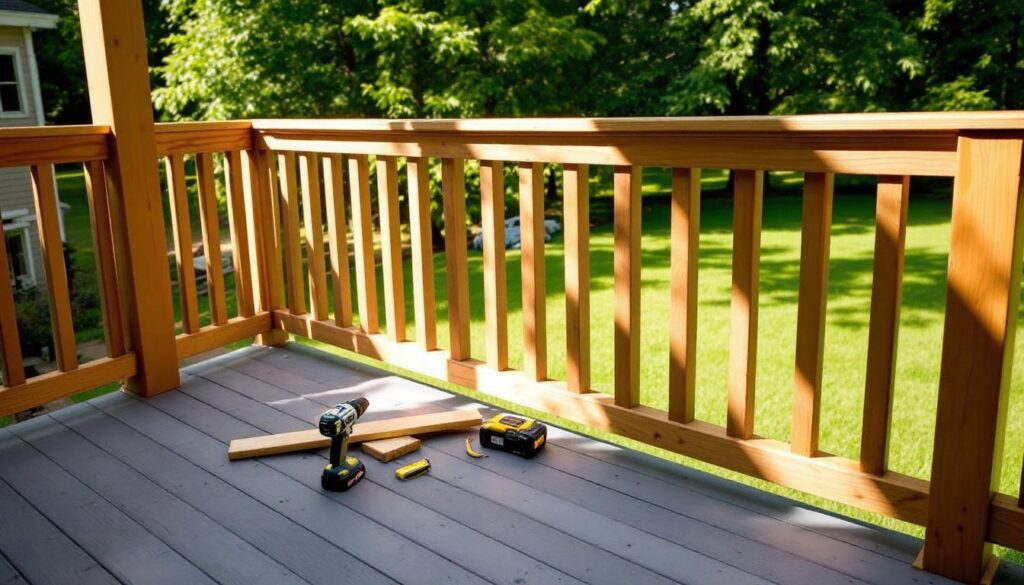
Vertical balusters are the most straightforward railing design to build. The pattern is forgiving, materials are standard, and the process translates well across skill levels. The traditional approach uses 2×2 balusters spaced 3.5–4 inches apart, running from the bottom rail to the top cap.
For a cleaner look, consider chamfering or routing the edges of each baluster before installation. A simple 45-degree chamfer on all four edges softens the profile and adds a custom touch without requiring advanced joinery. Run each baluster through a table saw with the blade tilted, or use a chamfer bit in a router table. This step takes an extra hour for a typical 20-foot run but elevates the finished appearance significantly.
Another modern variation: alternate baluster widths. Mix 2×2s with 1×4s in a repeating pattern, two narrow, one wide, for subtle visual rhythm. This works especially well with stained cedar where the grain variation becomes a design feature. Secure balusters with two 3-inch exterior-grade screws (top and bottom) driven through pre-drilled pilot holes to prevent splitting.
When cutting balusters to length, measure from the deck surface to the underside of the top rail, then subtract 1/4 inch for clearance. This small gap prevents moisture from wicking up from the deck boards and accelerates drying after rain. Use a miter saw with a stop block to ensure consistent lengths across all pieces, inconsistent baluster heights are immediately visible and difficult to correct after installation.
Horizontal Slat Railings for Contemporary Appeal
Horizontal railings deliver a modern, streamlined look that complements contemporary architecture. The design emphasizes clean lines and minimal visual interruption, making decks feel more open. Construction is slightly more involved than vertical balusters but still achievable for intermediate DIYers.
The most common approach uses 1×4 or 1×6 boards laid flat and stacked horizontally between posts spaced 4 to 6 feet apart. Closer post spacing (4 feet) allows thinner slats: wider spans require thicker material to prevent sagging. Each slat attaches directly to the posts with 2.5-inch exterior screws, countersunk and filled for a seamless face.
Spacing is critical. To meet the 4-inch sphere rule (preventing a 4-inch ball from passing through), calculate slat spacing carefully. With 1×4 boards (actual dimension 3/4 inch × 3.5 inches), a maximum gap of 3.25 inches between boards keeps you code-compliant. Measure from the top edge of one board to the bottom edge of the next.
Many builders appreciate beginner woodworking projects that simplify layout work, and horizontal railings benefit from jigs. Cut a scrap block to the exact gap dimension and use it as a spacer while installing each course. Start from the bottom and work up, checking level every third or fourth board. Minor variations compound quickly in horizontal designs.
One hidden challenge: horizontal rails collect water and debris more readily than vertical balusters. Drill 1/4-inch weep holes every 12–16 inches along the bottom edge of each slat to allow drainage. Without this step, standing water accelerates rot even in pressure-treated lumber. Tilt the drill bit slightly downward so holes drain freely.
Rustic Cable and Wood Combination Railings
Cable railing paired with wood posts offers an unobstructed view while maintaining the warmth of natural materials. This hybrid approach works particularly well on elevated decks overlooking landscaping or water features. The design uses substantial wood posts, typically 4×4 or 6×6, with horizontal stainless steel cables tensioned between them.
Stainless steel cable (1/8-inch or 3/16-inch diameter) is the standard choice. It resists corrosion, requires minimal maintenance, and handles tension loads without stretching over time. Pre-fabricated cable railing kits include tensioners, fittings, and mounting hardware, simplifying installation considerably. Expect to pay $30–$50 per linear foot for quality components.
Post spacing matters more with cable than with traditional balusters. Maximum spacing is typically 4 feet on center, wider spans allow too much cable deflection under lateral load. Anchor posts securely with blocking or metal post bases: cables exert significant outward force when tensioned. Many woodworking project plans emphasize proper post anchoring as the foundation of any railing system.
Cable spacing follows the same 4-inch rule as balusters. With typical cable diameters, this translates to approximately 3 inches between cable runs. Drill holes through posts at precise intervals using a drilling jig or template to ensure consistent alignment. Misaligned holes are immediately visible once cables are installed and difficult to correct.
Tensioning requires patience. Use the manufacturer’s tensioning tool to gradually tighten each cable, working from bottom to top and making multiple passes. Cables should be firm with minimal deflection when pressed, too loose and they sag: too tight and you risk pulling fittings free or warping posts. Check tension after the first few weeks as new cable stretches slightly under load.
Budget-Friendly Lattice Panel Railing Designs
Lattice panels provide visual interest at a fraction of the cost of individual balusters. Pre-made 4×8 lattice sheets (in wood or vinyl-coated wood) run $20–$40 per sheet, enough to cover 32 linear feet of railing when trimmed to height. The interwoven pattern adds texture and partial privacy without blocking airflow.
Construction is straightforward. Build a 2×4 frame between posts to hold each lattice panel. The frame consists of top and bottom rails with the lattice sandwiched between. Secure the lattice with 1×2 trim strips screwed through the lattice into the frame rails. This captures the panel without exposed fasteners and allows easy replacement if a section is damaged.
Choose lattice spacing carefully. Square lattice with 1.75-inch openings meets most building codes, while diagonal lattice with similar spacing adds visual movement. Larger openings (3-inch or more) may not pass inspection, so verify requirements before purchasing. Some inspectors require blocking behind lattice to reinforce it against lateral loads, check locally.
Paint or stain lattice panels before installation. Trying to finish them in place is tedious and results in uneven coverage. Lay panels flat, apply two coats of exterior paint or solid stain, and let them cure fully before framing. This also seals all edges and reduces moisture absorption.
One practical note: lattice is less durable than solid balusters. It’s prone to impact damage from furniture, equipment, or active kids. Consider it for low-traffic sections or as infill for porch railings where durability demands are lower. For high-use deck areas, traditional balusters or cables hold up better long-term.
Essential Tips for Building and Maintaining Wood Railings
Successful railing projects start with proper post installation. Posts carry all structural loads and anchor the entire system. Use galvanized or stainless steel post bases bolted through the deck rim joist and framing with 1/2-inch lag bolts or through-bolts. Surface-mounting posts to deck boards alone is not code-compliant in most jurisdictions and risks failure.
When working with treated lumber, wear gloves and safety glasses, the preservative chemicals are irritants. Pre-drill all screw holes to prevent splitting, especially near board ends. Use coated or stainless steel fasteners: standard screws corrode quickly in treated wood and leave rust stains.
For wood handrail plans that incorporate 4×4 posts and 2×4 supports, ensure all cuts are square and joints are tight. Gaps allow moisture intrusion and accelerate decay. Apply exterior wood glue to joints before fastening for added strength and weather resistance.
Maintenance begins the day the railing is installed. Apply a water-repellent sealer or penetrating stain within two weeks of completion, before the wood weathers. Recoat every 2–3 years, or sooner if water no longer beads on the surface. Clean railings annually with a deck cleaner to remove mildew, dirt, and UV-damaged surface fibers before resealing.
Inspect railings each spring for loose fasteners, cracked boards, or rot. Tighten screws that have backed out and replace any damaged components immediately. Check posts for movement, wobbling indicates failed connections that compromise the entire system. A well-maintained wood railing can last 15–20 years or more, but neglect shortens that lifespan dramatically.
Conclusion
Wood deck railings combine accessibility, versatility, and classic appeal. Whether opting for traditional vertical balusters, sleek horizontal slats, modern cable hybrids, or budget-conscious lattice, the key is matching the design to skill level and maintenance commitment. With proper planning, code-compliant construction, and regular upkeep, a DIY wood railing delivers years of safe, attractive service.