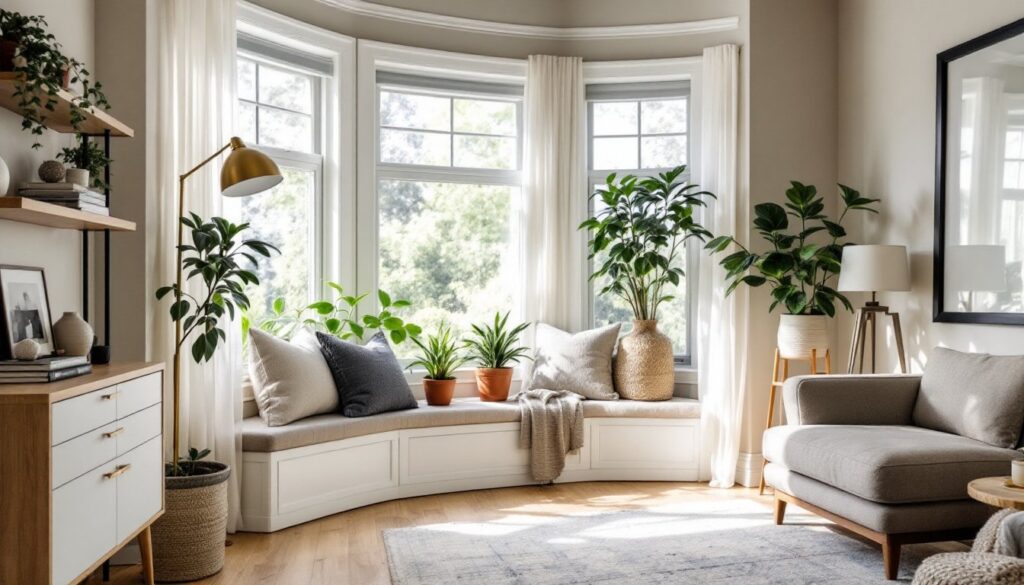
A bay window in a small living room isn’t a decorating challenge, it’s an opportunity. That alcove brings in natural light, creates architectural interest, and offers flexible space that can serve multiple purposes. The trick is treating it as part of the room’s flow, not an awkward add-on. Whether someone inherited a dated bay window setup or just moved into a compact space with one, a few intentional choices with furniture placement, window treatments, and color can turn that protruding nook into the room’s best feature.
Table of Contents
ToggleKey Takeaways
- Small living room bay window decorating works best when you treat the alcove as an integral part of the room’s design rather than an awkward add-on, using it to enhance light, depth, and usable space.
- Choose furniture with exposed legs and keep the bay open—avoid bulky sofas that block light—and consider creating a window seat, reading nook, or conversational seating area tailored to your bay’s specific dimensions.
- Cellular shades, sheer curtains on curved rods, or café curtains are ideal window treatments that accommodate angled bay panels while preserving natural light without looking cluttered.
- Use light paint colors like Swiss Coffee or soft greige on walls, avoid contrasting trim, and layer ambient, task, and accent lighting to make your small room feel larger and brighter throughout the day.
- Keep bay window sills and surrounding decor minimal and curated—group items in odd numbers, add height variation with plants, and use floating shelves or storage baskets to maximize function without creating visual chaos.
- Mirrors placed adjacent to the bay amplify light and create the illusion of more space, while oversized mirrors can make a small living room feel twice as large.
Why Bay Windows Are a Design Advantage in Small Living Rooms
Bay windows extend the footprint of a room without adding square footage. That extra few feet of depth creates usable space for seating, storage, or display without encroaching on the main traffic path.
The angled glass panels pull in light from multiple directions, which makes the entire room feel brighter and more open. In a small living room where wall space is limited, the bay becomes a focal point that draws the eye outward instead of letting it bounce around cramped corners.
Unlike a standard flat window, a bay offers three distinct planes. The center panel typically faces straight out, while the side panels angle back at 30 or 45 degrees. This geometry creates natural zones within the alcove, perfect for layering furniture, plants, or decor without cluttering the main seating area.
Many homeowners underestimate how much visual and functional real estate a bay window adds. It’s not just about the view. The sill depth, the angled walls, and the overhead space all contribute to a room’s perceived size and comfort.
Furniture Placement Strategies That Maximize Your Bay Window Area
Start by measuring the depth and width of the bay alcove. Most residential bays extend 18 to 24 inches from the wall, though deeper models can push 36 inches. Knowing the exact dimensions helps avoid furniture that’s too bulky or too shallow to look intentional.
If the bay is wide enough, flanking it with a pair of narrow armchairs or a small loveseat creates a conversational nook that doesn’t interrupt the main seating arrangement. Position chairs at a slight angle to mirror the window’s geometry. This keeps sightlines open and avoids blocking the light.
For tighter spaces, a single accent chair or a small side table paired with a floor lamp can anchor the bay without overwhelming it. Choose furniture with exposed legs, mid-century style or spindle-leg pieces work well, to maintain a sense of airflow beneath and around the bay.
Avoid pushing a full-size sofa into the bay unless the room layout demands it. Sofas block light and make the alcove feel like dead space. If a sofa must face the bay, pull it a few feet away and use the gap for a narrow console or a row of planters.
Consider the proven decorating techniques that emphasize working with a room’s existing features rather than against them. The bay is already doing heavy lifting, let it.
Creating a Cozy Window Seat or Reading Nook
A window seat turns an underused bay into a functional retreat. If the sill is at least 16 inches deep and 18 inches off the floor, it’s a candidate for a built-in or freestanding bench.
For a DIY approach, build a simple platform using 2×4 framing and a 3/4-inch plywood top. Secure the frame to the wall studs for stability, especially if the seat will support an adult’s weight regularly. Finish with a hinged top for hidden storage underneath, ideal for throws, books, or board games.
Add a 4-inch foam cushion cut to size and upholstered in durable fabric like canvas or indoor-outdoor performance material. Cushions take a beating from sun exposure and daily use, so skip delicate textiles.
Flank the seat with narrow shelving or wall-mounted reading lights. Adjustable sconces save floor space and direct light exactly where it’s needed. If wiring isn’t an option, battery-powered LED picture lights work surprisingly well.
Pillow arrangement matters. Two to three pillows max, one lumbar support and a couple of accent squares. More than that and the seat becomes a staging area instead of a usable spot. Design enthusiasts at Apartment Therapy often emphasize keeping window seats streamlined to maintain their function.
If building isn’t feasible, a storage bench or a pair of cube ottomans can achieve a similar effect. Just ensure the height aligns with the sill so the setup looks deliberate, not improvised.
Window Treatment Ideas That Enhance Light and Space
Bay windows need treatments that accommodate their angled shape without blocking light or looking cobbled together. Skip heavy drapes that swallow the alcove. The goal is to frame the window, not hide it.
Cellular shades (honeycomb shades) are a solid choice for bays. They mount inside each window section, follow the angles cleanly, and offer adjustable light control. Top-down/bottom-down models let someone pull light in from above while maintaining privacy below, useful if the bay faces a sidewalk or neighboring yard.
Sheer curtains on a curved or angled rod soften the bay without sacrificing daylight. Use a continuous rod that follows the window’s shape, or install separate rods on each panel. Linen or voile in white or soft gray diffuses harsh sun and keeps the space feeling airy.
For privacy without bulk, consider café curtains on the lower half of each bay panel. Pair with a valance or leave the top bare to maximize light. This setup works well in street-facing living rooms where full-length curtains feel excessive.
Avoid vertical blinds. They’re clunky in a bay and tend to hang unevenly on angled windows. If budget is tight, simple roller shades in a light-filtering fabric do the job cleanly. Mount them as high as possible to elongate the window visually.
Don’t forget hardware. Tension rods can work for lightweight sheers, but anything heavier needs screws into the window frame or wall studs. Bay windows often have limited mounting surface, so measure twice and use #8 wood screws or appropriate wall anchors for drywall.
Color Schemes and Lighting to Make Your Small Living Room Feel Larger
Light colors reflect natural light and make walls recede. In a small living room with a bay window, paint the walls in shades like Swiss Coffee, Alabaster, or soft greige. These neutrals bounce light around without the starkness of pure white.
If bold color is a must, save it for an accent wall opposite the bay. This draws the eye across the room and creates depth. Deep blues, charcoal, or even a muted terracotta can work, but limit it to one surface to avoid shrinking the space.
Paint the bay window trim and surrounding wall in the same color as the rest of the room. Contrasting trim fragments the space and emphasizes the room’s small size. Unified color creates a seamless flow.
Layered lighting is essential. A single overhead fixture leaves corners dark and flattens the room. Combine ambient light (a flush-mount or semi-flush ceiling fixture), task light (table lamps or sconces), and accent light (LED strips under shelving or behind the TV).
Place a floor lamp in or near the bay to highlight the alcove after dark. An arcing floor lamp can curve over a window seat or chair without taking up extra floor space. Choose a lamp with a dimmer switch for flexibility.
Natural light is the room’s biggest asset, but it shifts throughout the day. Those exploring beginner-friendly design strategies quickly learn that relying on overhead lighting alone leaves a room feeling flat at night.
Mirrors amplify light and create the illusion of more space. A large mirror on the wall adjacent to the bay reflects both daylight and the view, doubling the visual impact. Lean a floor mirror against the wall or hang a framed mirror at eye level. Designers featured on Young House Love often use oversized mirrors in small rooms to make them feel twice as large.
Avoid heavy lampshades in dark colors. Opt for linen or paper shades in white or cream to diffuse light evenly. Swap out any dated yellow-toned bulbs for LED bulbs in 2700K–3000K (warm white). The color temperature mimics natural light without the harshness of daylight LEDs.
Decorative Accents and Storage Solutions for Bay Window Areas
Bay window sills offer prime real estate for decor, but clutter kills the effect. Group items in odd numbers, three small planters, a single vase, or a stack of two books topped with a decorative object.
Plants thrive in the consistent light of a bay window. Choose varieties that match the sun exposure: succulents and cacti for south-facing bays, pothos or ferns for east or north. Use a mix of heights, a tall fiddle-leaf fig in one corner, trailing ivy on the sill, to create layers without crowding.
If the bay includes a window seat with storage, use baskets or fabric bins to keep the contents tidy. Open storage looks messy fast. Lidded baskets in natural materials like seagrass or rattan blend with most decor styles and hide the chaos.
Floating shelves mounted on the walls flanking the bay add display space without eating into the room. Keep shelves shallow, 6 to 8 inches deep, and style them with a mix of books, small frames, and sculptural objects. Avoid overcrowding. Less is more in a small room.
A narrow console table behind a sofa facing away from the bay creates a visual boundary and adds surface area for lamps or decor. Choose a table no deeper than 12 inches to avoid blocking walkways. The styling tips used by interior designers often emphasize furniture that serves dual purposes in tight spaces.
Textiles add warmth without bulk. A lightweight throw draped over a chair, a small area rug defining the bay zone, or linen pillow covers in muted tones soften hard surfaces. Stick to two or three coordinating colors to avoid visual chaos.
Artwork can flank the bay or hang on the adjacent wall, but avoid placing anything directly in front of the window. It competes with the natural focal point. If the bay has deep sills, a small piece of framed art can lean casually against the glass, but secure it so it doesn’t slide.
For those looking to explore creative options, the bay window area is a place to experiment with textures and tones that might feel too bold elsewhere. The natural light tempers saturated colors and makes patterns feel less overwhelming.
Avoid tchotchkes. One well-chosen ceramic bowl beats a dozen random objects. Curate, don’t accumulate. Rooms featured on MyDomaine consistently demonstrate that restraint in accessorizing makes small spaces feel intentional rather than cramped.
Conclusion
A small living room with a bay window has built-in advantages that many larger, simpler rooms lack. The key is treating the bay as part of the room’s design, not a separate feature to work around. Thoughtful furniture placement, light-enhancing treatments, and restrained decor turn that alcove into the room’s strongest asset. The space is already there, just use it intentionally.