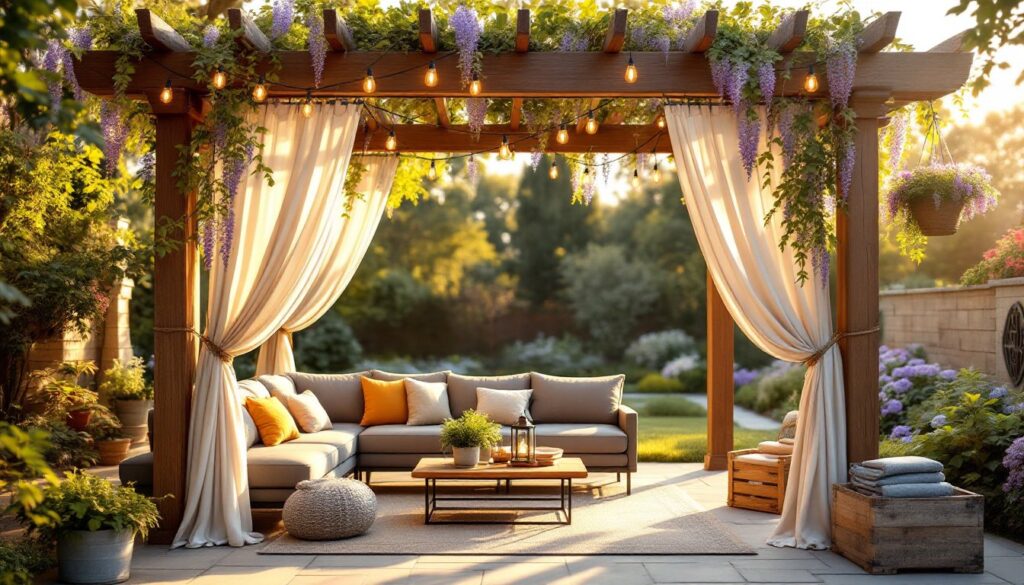
A bare pergola frame is just bones, it’s the decorating that brings it to life. Whether it’s anchoring a patio dining area, shading a garden path, or defining a backyard lounge, a pergola becomes a true outdoor room when it’s dressed with the right lighting, plants, fabrics, and accents. The beauty is in the layering: string lights overhead, climbing vines threading through the beams, curtains billowing at the sides, and furniture that invites people to stay awhile. This guide covers practical, field-tested ways to decorate a pergola, from wiring outdoor fixtures to training wisteria up posts, so it looks intentional and functions well in all seasons.
Table of Contents
ToggleKey Takeaways
- String lights and low-voltage LED systems are affordable, easy-to-install pergola decorating ideas that set the right mood and require proper outdoor-rated wiring and GFCI protection.
- Climbing vines like wisteria and clematis soften the pergola’s hard lines and provide seasonal shade, but need proper training with vinyl-coated wire to prevent wood rot.
- Outdoor curtains made from solution-dyed acrylic fabrics offer privacy and wind protection while creating a finished aesthetic on pergola decorating projects.
- Layering functional furniture, weather-resistant cushions, and textiles transforms a pergola into an inviting outdoor room that extends your home’s living space.
- Shade solutions ranging from budget-friendly bamboo screening to premium louvered roof systems can increase UV protection from 30% to nearly 100% coverage.
- Decorative accents like mirrors, potted planters, and fire features add character and personalization without cluttering the space.
Choose the Right Lighting to Set the Mood
Lighting defines how a pergola feels after dark. String lights are the go-to for a reason: they’re affordable, easy to install, and cast warm, diffused light. For pergolas with open rafters, drape Edison-bulb café lights (usually 48-foot strands with 15 sockets) in parallel lines or zigzag patterns. Use screw-in cup hooks or metal cable guides anchored into the beam faces to keep wires taut and prevent sagging.
For integrated lighting, consider low-voltage LED strip lights (12V or 24V systems) routed along the tops of beams or tucked into dado grooves if the pergola was custom-built. These systems require a transformer and weatherproof connectors, but they’re dimmable and long-lasting. Solar post caps work well for 4×4 or 6×6 posts, they’re self-contained, need no wiring, and provide ambient downlight.
Lanterns and pendant fixtures add vertical interest. Hang them from S-hooks or eye bolts (½-inch diameter, rated for outdoor use) screwed into the cross beams. If running hardwired pendants, route 12/2 UF-B cable (underground feeder, rated for wet locations) through conduit along the pergola frame. Check local code, most jurisdictions require GFCI protection for outdoor receptacles and fixtures. Always turn off power at the breaker when making connections, and consider hiring a licensed electrician if the run is longer than 20 feet or involves junction boxes.
Add Climbing Plants and Greenery for Natural Beauty
Living plants soften hard lines and provide seasonal shade. Climbing vines are the classic pergola pairing. Plant them at the base of posts in soil beds or 16-inch-diameter planter boxes filled with well-draining potting mix. Wisteria (both American and Chinese varieties) produces cascading blooms in spring, but it’s aggressive, prune annually to keep it from overwhelming the structure. Clematis offers color without the weight, and it’s easier to control.
For year-round foliage, evergreen climbers like Carolina jessamine or climbing hydrangea work in temperate zones. In hot, dry climates, bougainvillea thrives with minimal water once established. Train vines using vinyl-coated wire or jute twine looped around posts and cross beams. Avoid wrapping directly around pressure-treated lumber, moisture trapped under vine growth can accelerate wood rot.
Hanging baskets and potted plants add vertical greenery without permanent commitment. Suspend baskets from swivel hooks (rated for at least 15 pounds) screwed into rafter tails. Use trailing plants like ivy, string-of-pearls, or ferns for a lush canopy effect. For incorporating more outdoor design strategies, consider layering plants at different heights, low ground covers, mid-height shrubs in planters, and climbers reaching overhead. Water requirements vary, so group plants with similar needs together and install a drip irrigation line if maintaining multiple pots becomes a chore.
Incorporate Outdoor Curtains and Fabric Elements
Outdoor curtains provide privacy, wind protection, and a finished look. Use fabric rated for exterior use, solution-dyed acrylic (Sunbrella is a common brand) resists fading and mildew better than cotton or polyester blends. Standard panel widths are 50 to 54 inches, and length should reach the ground or puddle slightly for a relaxed aesthetic.
Hang curtains from stainless steel or aluminum curtain rods mounted to the pergola’s beam faces with heavy-duty brackets. For a ceiling-mount track system, consider marine-grade traverse tracks (the kind used on boats), they’re weatherproof and allow curtains to slide open and closed easily. Space grommets or tabs 6 to 8 inches apart to prevent sagging.
Tie-backs made from rope, leather straps, or matching fabric keep panels open during calm weather. In high-wind areas, add weighted hems (you can sew small pockets and insert hex nuts or chain links) or bungee tie-downs at the bottom corners to prevent flapping. Curtains are optional on all four sides, many homeowners outfit just two sides for directional shade or to block sight lines from neighboring properties. Fabrics inspired by farmhouse and rustic styles often feature neutral tones and natural textures that suit outdoor settings well.
Create a Cozy Seating Area with Furniture and Textiles
Furniture selection depends on the pergola’s footprint and intended use. For dining, a 6- or 8-foot rectangular table with matching chairs fits most pergolas in the 10×12 to 12×16-foot range. Choose materials that handle weather: powder-coated aluminum frames, HDPE (high-density polyethylene) wicker, or teak for wood lovers who don’t mind annual oiling.
For lounge setups, modular sectionals offer flexibility. A typical L-shaped sectional occupies about 90 inches per leg, so measure the pergola’s interior clearance before ordering. Elevate comfort with outdoor cushions (look for 4- to 6-inch thickness with quick-dry foam cores) in weather-resistant covers. Store them indoors during prolonged rain or winter months to extend their life.
Textiles add softness. Layer an outdoor area rug (polypropylene or recycled plastic weaves are durable and easy to hose off) under the seating zone to define the space. Throw pillows in varied sizes (a mix of 18×18-inch and 12×20-inch lumbar pillows) introduce color and pattern. When selecting fabrics and accents, pull colors from the surrounding landscape, sage greens, terracotta, or denim blues, for a cohesive look.
Side tables and storage benches improve functionality. A bench with a hinged lid keeps cushions, blankets, or outdoor games dry and accessible. If the pergola sits on a deck or patio, anchor furniture legs with rubber pads to prevent scratching and reduce sliding in wind.
Enhance with Decorative Accents and Personal Touches
Details make a pergola feel curated, not just functional. Mirrors (use ones with weather-sealed backing) mounted on adjacent walls or fence panels reflect light and visually expand the space. Metal wall art, driftwood pieces, or vintage signs add character without taking up floor space.
Planters in mixed materials, galvanized steel tubs, ceramic urns, wooden crates, create visual rhythm. Group them in odd numbers (three or five) and vary heights using plant stands or upturned crates. Fill with seasonal plants: petunias and geraniums in summer, ornamental grasses and mums in fall.
Outdoor rugs and throw blankets extend usability into cooler months. Keep a basket stocked with fleece or sherpa blankets for evening gatherings. Fire features like a tabletop propane fire bowl or a freestanding fire pit (if local codes allow) provide warmth and ambiance. Maintain at least 10 feet of clearance from overhead beams if using open flame, check with your local fire marshal.
Sound elements are underrated. A small Bluetooth speaker discreetly mounted under a beam or a set of wind chimes hung from a rafter corner adds sensory depth. For a more permanent installation, some homeowners run outdoor-rated speaker wire to a weatherproof sound system. Avoid overloading the space, let a few standout pieces do the work rather than cluttering every surface.
Install Shade Solutions for Comfort and Style
Pergolas alone provide partial shade, typically 30 to 50% coverage depending on rafter spacing. For full sun protection, add retractable canopies or shade sails. Retractable canopy kits (manual or motorized) mount to the pergola’s top beams and extend along tracks. Fabric options include shade cloth (rated by percentage: 70% to 90% blocks more UV) or waterproof polyester if rain protection is a priority. Motorized versions use 12V DC motors and can integrate with smart home systems.
Shade sails made from HDPE mesh or PU-coated polyester attach at three or four corners using turnbuckles and eye bolts anchored into the pergola frame or nearby posts. Tension the fabric until it’s drum-tight, loose fabric flaps in wind and wears faster. When planning pergola structures and shade options, angle the sail slightly to encourage water runoff rather than pooling.
Louvered roof systems are the premium option. These adjust slat angles to control sun and airflow, and fully close to shed rain. They’re typically powder-coated aluminum and require professional installation, expect to budget several thousand dollars depending on pergola size. Building codes sometimes classify louvered roofs as permanent structures, so check permit requirements.
Bamboo or reed screening offers a budget-friendly, natural-look alternative. Roll it out across the top rafters and secure with zip ties or stainless steel wire. It degrades over time (plan to replace every 2 to 3 years) but provides good dappled shade and a textured aesthetic. For southern-style outdoor living spaces, slatted wood shades or lattice panels are popular and allow air circulation while reducing heat.
Conclusion
Decorating a pergola isn’t about filling it with stuff, it’s about layering functional elements that create a space worth using. Start with lighting and shade, add plants that thrive in your climate, then build in seating and accents that match how you actually live outdoors. Measure twice, use the right hardware, and don’t skip weatherproofing. A well-decorated pergola extends the home’s footprint and holds up season after season.