Staircases get walked on dozens of times a day but rarely get the decorating attention they deserve. That’s a missed opportunity. A well-decorated staircase can become a focal point that ties together two floors, adds personality, and even solves storage problems. Whether it’s a narrow townhouse staircase or a grand entryway feature, a few intentional decor choices can turn those steps into something worth stopping to admire. This guide covers 15 practical, creative ways to upgrade staircase spaces, from gallery walls and lighting upgrades to painted risers and functional built-ins.
Table of Contents
ToggleKey Takeaways
- Staircase decor ideas transform overlooked vertical spaces into functional focal points that tie together multiple floors and enhance your home’s overall aesthetic.
- Gallery walls, statement lighting, and painted risers are practical, approachable DIY projects that immediately elevate the look of staircase spaces without requiring professional installation.
- Stair runners add color, texture, and sound dampening while runners and risers should be secured firmly to prevent slipping and ensure safety in high-traffic areas.
- The space under stairs offers valuable storage potential through built-in cabinets, floating shelves, or mudroom setups that maximize functionality without reducing required stairway width.
- Plants and greenery bring life to staircases; choose low-light tolerant varieties like snake plants for dim stairwells and position larger plants on landings to avoid blocking traffic flow.
- Any structural modifications, electrical work, or storage additions must comply with International Residential Code standards and local building codes to ensure safety and maintain code compliance.
Why Your Staircase Deserves More Attention
Most homes treat staircases as pure utility, a way to get from one floor to another and nothing more. But staircases occupy prime vertical real estate and are visible from multiple angles. A bland staircase drags down the look of adjacent rooms, while a thoughtfully decorated one elevates the entire space.
Staircases also offer unique decor opportunities. The wall alongside the stairs is often taller and more expansive than typical room walls, making it ideal for vertical displays. The steps themselves can be customized with paint, stain, or runners. And the space beneath? That’s potential storage or display area going to waste in most homes.
Before diving into decor, consider the structure and finish of the staircase itself. If treads are worn, risers are scuffed, or the handrail is wobbly, address those first. A fresh coat of paint on the handrail, sanded and refinished treads, or tightened balusters will make any decorative additions look intentional rather than like camouflage. For stairs with structural issues, squeaks, loose treads, or code violations like uneven riser heights, tackle those repairs before cosmetic work. Some fixes require a carpenter or building inspector approval, especially if modifying handrails or guardrails that must meet International Residential Code (IRC) standards for height and spacing.
Wall Art and Gallery Displays Along the Stairway
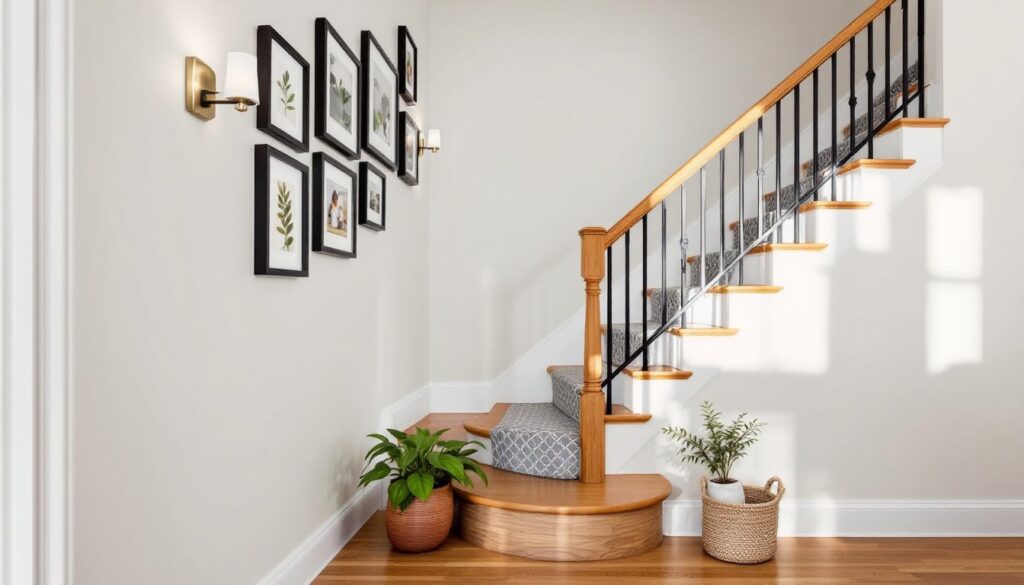
A staircase wall is one of the best spots in the home for a gallery display. The incline naturally draws the eye upward, and the extended wall space can accommodate more frames than a typical hallway.
Planning the Layout:
- Start by measuring the wall height and noting any architectural features like wainscoting, chair rails, or light switches that affect placement.
- Use painter’s tape or kraft paper templates to mock up frame positions before hammering a single nail. Align the center of each frame with the incline of the stair steps to keep the visual flow consistent.
- Spacing between frames should be 2 to 3 inches for a cohesive gallery look. Wider gaps can make the arrangement feel disconnected.
Frame Selection and Hanging:
Mix frame sizes and orientations, but keep a unifying element, matching frame color, mat style, or a consistent subject matter. Black frames with white mats work in nearly any setting and let the art stand out.
For hanging, use picture-hanging hooks rated for the frame weight rather than nails alone. Studs aren’t always conveniently located on stair walls, so toggle anchors or molly bolts work well on drywall. Mark stud locations with a stud finder first if you’re hanging heavier pieces like large canvas prints or mirrors.
Some homeowners opt for simple decorating strategies that layer smaller, lightweight frames without needing anchors at all, 3M Command picture-hanging strips hold up to 16 pounds per set and leave no holes, which is useful for renters or anyone hesitant to commit to nail holes.
Beyond Frames:
Consider dimensional pieces like small floating shelves with rotating decor, metal wall sculptures, or woven baskets mounted as accent pieces. Just ensure they don’t protrude so far that they create a head-bumping hazard for taller individuals using the stairs.
Lighting Solutions That Make a Statement
Staircases are high-traffic areas that need functional lighting for safety, but that doesn’t mean the fixtures have to be boring. Good lighting also highlights whatever decor you’ve added to the stairs and surrounding walls.
Overhead and Pendant Options:
If the staircase opens to a two-story foyer or high ceiling, a statement chandelier or oversized pendant light can anchor the space. Size matters, measure the ceiling height and stairwell width before ordering. A fixture that’s too small looks lost: too large, and it overwhelms or creates a collision hazard. As a rule of thumb, add the room’s length and width in feet, then convert that sum to inches for an appropriate chandelier diameter. For a 10-foot by 12-foot stairwell, a 22-inch-diameter fixture is a good starting point.
Installing a new overhead fixture usually involves working with existing electrical boxes. If the current box isn’t rated for the weight of a heavy chandelier, it must be replaced with a ceiling fan-rated or heavy-duty box anchored to framing. This is a job best left to a licensed electrician if it involves running new wiring or upgrading circuits, and it typically requires a permit under the National Electrical Code (NEC).
Wall Sconces and Step Lighting:
Wall sconces along the staircase add both safety and ambiance. Install them at consistent intervals, every 6 to 8 feet works well, and at a height of around 60 to 66 inches from the tread nosing. Hardwired sconces require cutting into drywall and running electrical cable, but plug-in sconces with decorative cord covers offer a simpler retrofit option.
For a modern look, low-profile LED strip lights or recessed step lights can be installed along the stair risers or underneath the tread nosing. These are especially useful for homes where creative decorating approaches blend function and style. Step lights typically run on low-voltage systems (12V or 24V) and are safer and easier to install than standard 120V fixtures. Some systems include motion sensors that activate the lights automatically when someone approaches the stairs.
Safety Note:
Any electrical work involving new circuits, junction boxes, or modifications to existing wiring should be inspected and approved per local codes. DIYers comfortable with basic electrical tasks can often handle fixture swaps, but new wiring runs require a permit and often an electrician.
Runner Rugs and Painted Stair Risers
Runners and painted risers are two of the most impactful decor changes for staircases, and both are approachable DIY projects.
Choosing and Installing a Stair Runner:
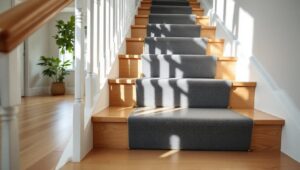
A runner adds color, texture, and sound dampening. Standard runner widths are 27 or 32 inches, which leaves several inches of exposed tread on each side for a traditional look. Measure the staircase carefully: count the number of treads and risers, measure tread depth (usually around 10 inches) and riser height (typically 7 to 8 inches), then add a few extra feet for trimming and tucking.
Natural fiber runners like sisal or jute are durable and hide dirt well but can be rough underfoot. Wool runners are softer and more stain-resistant. Synthetic options like polypropylene are budget-friendly and easy to clean, though they can look cheaper up close.
Installation methods vary. Stair rods (decorative metal bars that hold the runner in place at each step) are elegant but pricey. Tackless strips and padding create a plush, wall-to-wall look and are the most common professional method, install strips along the back of each tread and the bottom of each riser, then stretch the runner over padding and tuck it into the strips. For a simpler DIY approach, double-sided carpet tape or heavy-duty staples work on painted or stained stairs, though they’re less forgiving if you need to adjust placement.
Runners should be secured firmly at the top landing and every few steps to prevent slipping. If the stairs see heavy use from kids or pets, check the runner every few months and re-secure any loose sections.
Painted Stair Risers:
Painted risers add personality without covering the wood treads. Popular looks include solid colors, patterns like stripes or chevrons, or even stenciled designs. White risers with stained treads are a classic combo, but bold colors, navy, charcoal, or even patterned wallpaper adhered to the risers, can make a statement.
Start by sanding the risers lightly with 120-grit sandpaper to rough up the surface, then wipe clean with a tack cloth. Apply a coat of bonding primer (especially important if painting over varnished or glossy wood), then two coats of a durable finish paint. Semi-gloss or satin acrylic latex holds up better to scuffs than flat paint. For extra durability on treads if painting those too, use porch and floor enamel rated for high-traffic areas and allow 48 to 72 hours of cure time before heavy use.
If using wallpaper or adhesive decals on risers, measure carefully and apply with wallpaper paste or peel-and-stick backing. Seal the edges with clear polyurethane to prevent peeling. Many DIYers following practical design tips find that a small paintbrush and patience go a long way on intricate patterns.
Greenery and Plant Styling for Staircase Spaces
Plants bring life to staircase areas, especially in homes where the stairwell feels dark or closed-in. But not every plant thrives in staircase conditions, light levels, humidity, and accessibility all matter.
Choosing the Right Plants:
Staircases with windows or skylights can support a wide range of plants. South- or west-facing stairwells with bright, indirect light work well for pothos, philodendrons, or even small fiddle-leaf figs. North-facing or interior stairwells with low light call for hardier options like snake plants, ZZ plants, or cast iron plants. These tolerate neglect and dim conditions better than most houseplants.
Avoiding plants that require frequent watering or high humidity is smart unless someone’s committed to hauling a watering can up and down the stairs weekly. Self-watering planters or planters with drainage trays prevent water damage to floors or carpeting.
Placement Ideas:
- Landings: Large potted plants or plant stands fit naturally on stair landings without blocking traffic flow. A tall snake plant or a fiddle-leaf fig in a 10- or 12-inch pot makes a statement.
- Wall-mounted planters: Floating shelves or wall-mounted planters add greenery without taking up floor space. Mount shelves securely into studs or use heavy-duty anchors rated for the combined weight of the planter, soil, and plant (often 15 to 25 pounds for a medium-sized pot).
- Hanging plants: If the stairwell has exposed ceiling beams or a high ceiling, hanging planters with trailing plants like string of pearls, spider plants, or English ivy add vertical interest. Use a sturdy ceiling hook rated for at least 20 pounds to support the planter plus the weight of water-saturated soil.
Maintenance Considerations:
Dust accumulates on leaves in high-traffic areas. Wipe down large-leafed plants with a damp cloth monthly to keep them looking fresh and to improve their ability to photosynthesize. Rotate plants every few weeks if they’re near a window so all sides receive even light and growth stays balanced.
Some budget-friendly decorating projects incorporate faux plants for staircases that get little natural light or where watering access is a hassle. High-quality faux plants have come a long way, and a quick dusting keeps them looking realistic.
Creative Storage and Functional Decor Solutions
Staircases often sit adjacent to wasted space, the area under the stairs is prime real estate for storage or functional decor, and the stairway walls themselves can host practical additions.
Under-Stair Storage:
The triangular void beneath a staircase is usually dead space, but it doesn’t have to be. Options include:
- Built-in cabinets or drawers: Custom cabinetry maximizes every inch. Shallow drawers near the low end of the staircase work for shoes, pet supplies, or seasonal items. Deeper cabinets closer to the high end can hold coats, vacuum cleaners, or pantry overflow. Building cabinets under stairs requires careful measuring and often involves cutting into drywall or removing existing framing. This is a weekend project for someone comfortable with a miter saw, drill, and basic carpentry. If the staircase is load-bearing (which most are), do not remove or alter any structural framing without consulting a structural engineer.
- Open shelving: Floating shelves or a bookcase tucked under the stairs create display space for books, decor, or baskets. This is simpler than cabinetry and still keeps the area functional. Anchor shelves to wall studs with heavy-duty brackets rated for the expected load, books are heavy, and shelves loaded with hardcovers can weigh 30 to 50 pounds per linear foot.
- Coat nooks or mudroom setups: If the staircase is near an entryway, add hooks, a bench, and a shoe rack under the stairs for a compact mudroom. Wall-mounted hooks should go into studs, or use toggle bolts rated for at least 50 pounds if mounting on drywall alone.
Wall-mounted Functional Decor:
Staircase walls can hold more than art. Consider:
- Narrow console tables or floating desks: If the staircase wall is wide enough and the stairs themselves don’t intrude, a shallow console table (8 to 10 inches deep) adds a surface for keys, mail, or decorative objects. This works best on the wall at the top or bottom of the stairs rather than along the incline.
- Pegboards or wall organizers: A pegboard painted to match the wall or in a contrasting color can hold hats, bags, or small planters. It’s easy to install, just mount a 1×2 or 1×3 furring strip behind the pegboard to create space for the pegs to fit through the holes, then screw the assembly into studs.
- Mirrors: A large mirror along a staircase wall reflects light and makes a narrow stairwell feel more open. Mounting a heavy mirror requires two people and secure anchoring into studs or use of heavy-duty wall anchors.
Safety and Code Considerations:
Any built-in storage or decor along a staircase must not reduce the minimum stairway width required by the IRC, which is typically 36 inches clear width measured from wall to handrail or wall to wall if no handrail is present. Adding bulky furniture or decor that narrows the path creates a trip hazard and may not pass inspection if selling the home. Measure carefully and keep walkways clear.
For complex built-ins or structural modifications, hiring a carpenter or contractor familiar with room makeover projects ensures the work is done safely and up to code. Many municipalities require permits for alterations that involve electrical, plumbing, or structural changes, even in under-stair spaces.
Conclusion
Staircases are more than a way to move between floors, they’re an opportunity to add style, function, and personality to a home. Gallery walls, updated lighting, runners, painted risers, greenery, and smart storage all turn overlooked stairs into features worth noticing. Start with one or two changes that fit the space and budget, and build from there. With a little planning and effort, a staircase can become one of the most memorable parts of a home.