Blue vanities have become the go-to solution for homeowners trying to add personality to cramped bathrooms without overwhelming the space. Unlike bold wallpaper or heavy tile treatments, a blue vanity anchors the room while reflecting light in ways that darker wood tones can’t. It’s a practical upgrade that doubles as a design statement, especially in bathrooms where every square foot counts. Whether you’re replacing a worn-out builder-grade cabinet or planning a full remodel, choosing the right shade and pairing it with smart spatial tricks can make a 5×7 powder room feel like a spa retreat.
Table of Contents
ToggleKey Takeaways
- A blue vanity anchors small bathrooms by adding visual depth without overwhelming the space, making tight quarters feel more spacious and polished.
- Choose navy or dark blue shades for drama and contrast in well-lit bathrooms, or powder blue and robin’s egg tones to reflect light and enhance airiness in naturally darker spaces.
- Soft-close drawers, pull-out trays, and vertical dividers maximize storage efficiency in small bathroom vanities, keeping daily essentials organized and accessible.
- Pair your blue vanity with crisp white or soft gray walls, light-colored flooring, and white quartz countertops to let the vanity stand out while maintaining a cohesive design.
- Proper lighting is critical—install side-mounted sconces at eye level (60–65 inches) and choose warm white (2700K–3000K) LED bulbs to prevent the vanity from looking dingy.
- Ensure all light fixtures within 8 feet of a tub or shower meet National Electrical Code requirements for damp/wet locations, and consider mounting a large frameless mirror to maximize light reflection and visual space.
Why a Blue Vanity Works Perfectly in Small Bathrooms
Blue vanities solve three common small-bathroom problems at once: they add depth without visual weight, they pair effortlessly with both warm and cool palettes, and they hide water spots better than white cabinetry.
From a design perspective, blue reads as recessive, it pushes walls back optically, which is exactly what tight quarters need. Dark blues mimic the visual weight of natural wood without the dated honey-oak vibe, while pale blues bounce light like white but with more character.
On the practical side, painted or stained blue finishes show fewer soap splatters and toothpaste smudges than stark white vanities. If you’ve got kids or a high-traffic guest bath, that alone justifies the choice. Blue also ages well: it doesn’t trend out as fast as millennial pink or emerald green.
Most stock vanities come in 24-inch, 30-inch, or 36-inch widths. For tight layouts, a wall-mounted blue vanity frees up floor space and makes cleaning underneath easier. Freestanding models with legs also work if the room has at least 40 inches of clearance from the opposite wall, code minimum in most jurisdictions per the International Residential Code (IRC).
Choosing the Right Blue Vanity Shade for Your Space
Not all blues behave the same way under bathroom lighting. The shade you pick determines whether the room feels moody, coastal, or mid-century modern.
Navy and Dark Blue Vanities for Drama
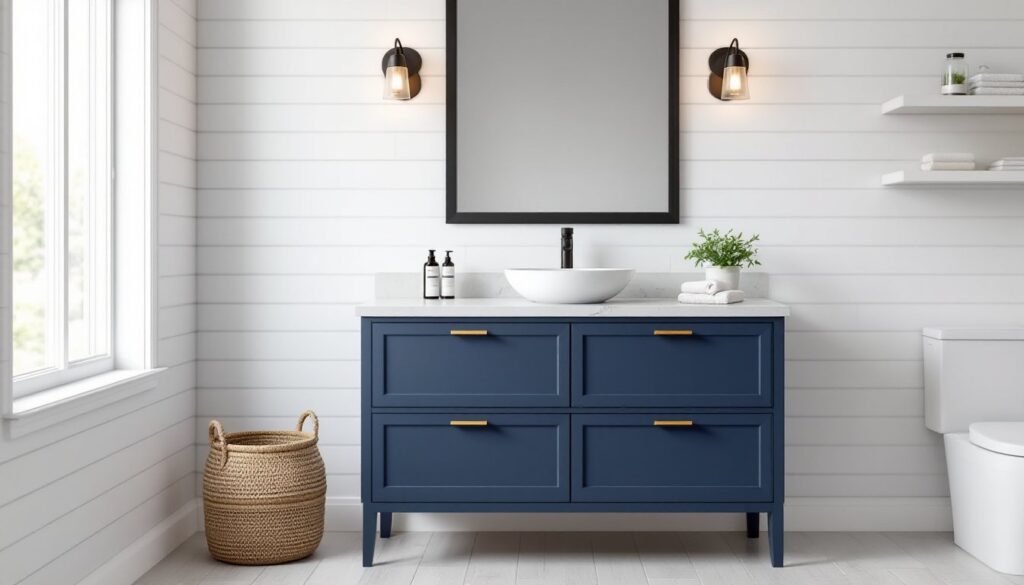
Navy, midnight blue, and deep teal vanities anchor a small bathroom with high contrast, especially against white subway tile or marble. These shades work best in bathrooms with natural light or strong artificial lighting, aim for at least 75 watts equivalent LED in a fixture rated for damp locations.
Dark blues pair naturally with brushed brass, matte black, or oil-rubbed bronze hardware. Skip chrome unless you’re layering in other cool metals elsewhere: the clash between warm blue undertones and stark chrome can feel jarring.
One caution: dark cabinetry shows dust and water minerals more than lighter finishes. If your water is hard, plan to wipe down the vanity weekly with a damp microfiber cloth and a pH-neutral cleaner.
Light Blue and Powder Blue for Airy Feels
Powder blue, robin’s egg, and icy aqua vanities reflect light and make walls feel farther apart. These shades suit bathrooms with limited windows or those facing north, where natural light skews cooler.
Light blues handle a wider range of hardware finishes, polished nickel, chrome, and even white porcelain knobs all work. For countertops, white quartz or Carrara-style laminate keeps the palette crisp without competing.
Be mindful of undertones. Some powder blues lean green (aqua), others lean gray (slate blue). Bring home sample chips and tape them to the wall next to your existing tile or flooring. Live with them for 48 hours under both daylight and evening lighting before committing. Paint can be color-matched to most factory vanity finishes if you’re DIYing a refinish on an existing cabinet.
Smart Storage Solutions to Maximize Your Blue Vanity
A vanity can be stunning and still fail if it doesn’t hold your daily essentials. Small bathrooms demand every inch of storage count.
Look for vanities with soft-close drawers rather than cabinet doors. Drawers let you organize vertically using drawer dividers and pull-out trays, no more digging behind bottles to find the hair dryer. A two-drawer stack beats a single door-and-shelf combo every time.
If you’re stuck with a pedestal sink or a tiny 18-inch vanity, add a wall-mounted cabinet above or beside the vanity in a matching or complementary blue. Floating shelves work too, but only if you’re disciplined about styling, cluttered open shelves shrink a room visually.
Inside the vanity, install pull-out trays or lazy susans to access plumbing corners. Use tension rods vertically between shelves to corral flat irons and spray bottles. Magnetic strips on the inside of doors hold tweezers, nail clippers, and bobby pins.
Don’t overlook the toe-kick space. Some custom and semi-custom vanities offer a toe-kick drawer (also called a plinth drawer) that slides out from the bottom. It’s shallow, maybe 3 inches tall, but perfect for flat items like bath mats, extra washcloths, or toilet paper rolls.
For homeowners considering colorful bathroom fixtures, coordinating the sink basin to a complementary hue can unify the vanity area.
Coordinating Colors and Materials That Complement Blue
Blue is forgiving, but it still needs a supporting cast. The goal is to let the vanity stand out without the room feeling disjointed.
Wall colors: Crisp white or soft gray walls let a blue vanity pop. If you want color on the walls, try warm white (Benjamin Moore’s Swiss Coffee or Sherwin-Williams’ Alabaster) rather than stark builder white, it softens the contrast. For a bolder move, paint the walls a lighter tint of the vanity’s blue: this creates a tonal, enveloping effect that can actually make the room feel larger.
Flooring: White or light gray porcelain tile (12×24-inch planks are popular and make small floors look longer) pairs with any blue. Natural wood-look luxury vinyl plank (LVP) in light oak or whitewashed finishes adds warmth without competing. Avoid busy patterns, small-scale mosaics or multicolor hex tiles chop up the floor and shrink the space.
Countertops: White quartz is the safe bet, but light gray quartz or honed marble adds subtle sophistication. If budget is tight, solid-surface laminate in white or pale gray costs a fraction of stone and still looks clean. Skip butcher block or dark granite, both fight with blue for attention.
Accents: Bring in natural wood via a mirror frame, shelving, or a stool. Wood warms up blue’s cool tones. Woven baskets, linen towels, and matte black faucets add texture without clutter. Brass and gold hardware trend warm and traditional: matte black reads modern.
Many design ideas for small spaces can be adapted from apartment living tips, where maximizing every inch is standard practice.
Lighting and Mirror Strategies to Expand Visual Space
Lighting makes or breaks a small bathroom. A blue vanity in a dim room looks dingy: the same vanity under good lighting looks intentional and polished.
Vanity lighting: Install sconces on either side of the mirror at eye level (roughly 60–65 inches from the floor) rather than a single bar above. Side lighting eliminates shadows on the face and spreads light more evenly. Choose fixtures rated for damp locations with LED bulbs in 2700K–3000K (warm white) or 3500K (neutral white). Avoid cool daylight bulbs (5000K+): they make blue look sterile.
If electrical permits are a hurdle, battery-operated LED sconces are now bright enough for daily use. Look for models with at least 400 lumens per sconce.
Overhead lighting: A recessed can light or a flush-mount LED fixture with a diffuser prevents harsh shadows. Pair it with a dimmer switch so you can dial down the brightness for evening baths.
Mirrors: Go as large as the wall allows. A frameless mirror or one with a thin metal frame keeps the look open. If your vanity is 30 inches wide, aim for a mirror at least 24–28 inches wide. Mounting it 4–6 inches above the countertop (or right on top of a backsplash) maximizes reflection.
Mirror tricks: A mirror that extends to the ceiling reflects overhead light downward and makes the wall feel taller. For narrow bathrooms, consider a mirror with integrated LED backlighting, it casts a glow behind the glass, adding depth and eliminating the need for separate sconces.
Browsing interior design portfolios online can spark ideas for lighting placement and mirror proportions tailored to compact layouts.
Safety note: All light fixtures within 8 feet of a tub or shower must be rated for damp or wet locations per the National Electrical Code (NEC). If you’re unsure about existing wiring, hire a licensed electrician, water and electricity don’t negotiate.