Converting unused basement square footage into a functional kitchen can solve a lot of problems, whether it’s supporting a rental suite, creating a dedicated prep space for canning and meal prep, or simply giving teenagers a place to make snacks without taking over the main kitchen. But basements come with challenges: low ceilings, limited natural light, and tight footprints that demand smarter-than-average planning. The good news? With the right layout, appliances, and design choices, even a cramped basement corner can become a surprisingly capable kitchen. This guide walks through practical strategies to make the most of every inch.
Table of Contents
ToggleKey Takeaways
- Small basement kitchen ideas transform unused space into functional living areas that support rental income, extended family, or overflow meal prep while requiring careful planning around low ceilings and limited natural light.
- Galley and L-shaped layouts maximize functionality in compact basements by keeping appliances within arm’s reach and positioning the sink near existing plumbing to avoid costly drain line installations.
- Compact appliances like 24-inch ranges, apartment-size refrigerators, and combination microwave-convection ovens free up precious square footage without sacrificing essential kitchen function.
- Light-colored cabinetry, seamless flooring, and mirrored backsplashes create the illusion of spaciousness, while layered LED lighting with daylight-spectrum bulbs prevents basement kitchens from feeling cramped.
- Before construction, verify local building codes for permits, plumbing capacity, electrical load requirements (minimum 20-amp circuits), and ventilation rules, especially for rental units or ADU spaces.
- DIY upgrades like cabinet painting, peel-and-stick backsplashes, open shelving, and faucet replacement deliver significant style and function improvements without contractor costs.
Why a Basement Kitchen Makes Sense for Your Home
A basement kitchen isn’t just about adding resale value, though it can, especially if the space supports an accessory dwelling unit (ADU) or in-law suite. It’s about creating functional separation in a busy household.
If the basement includes a bedroom and bathroom, adding a kitchenette transforms the area into a self-contained living space that can generate rental income or house extended family. Even without a bedroom, a basement kitchen serves as overflow for holiday meal prep, a staging area for preserving garden harvests, or a spot for messy projects like brewing kombucha or baking bread in bulk.
Before breaking ground, check local building codes. Many jurisdictions require permits for plumbing and electrical work, and some have specific rules about ventilation, egress windows, and fire safety for basement living spaces. If the kitchen will serve a rental unit, code requirements typically get stricter, especially around smoke detectors, carbon monoxide alarms, and independent HVAC systems.
Also consider whether existing plumbing and electrical capacity can handle the load. Adding a kitchen means running a dedicated 20-amp circuit (at minimum) for countertop appliances, plus separate circuits for major appliances like a refrigerator or microwave. Plumbing may require a sewage ejector pump if the basement floor sits below the main sewer line. Budget for these infrastructure upgrades early, they’re not optional.
Smart Layout Solutions for Compact Basement Kitchens
Layout is everything in a small kitchen. Poor planning wastes space and creates frustrating bottlenecks: smart planning makes even a 60-square-foot kitchenette feel workable.
Galley and L-Shaped Configurations
For narrow basement spaces, a galley layout puts everything within arm’s reach. Position the sink and cooktop on one wall, refrigerator and storage on the opposite wall, and keep the aisle width between 42 and 48 inches, enough to open cabinet doors and drawers without blocking traffic. Galley kitchens work especially well when one end opens to a living area, creating a natural flow.
If the basement has a corner to spare, an L-shaped layout offers more counter space and separates the work triangle (sink, stove, fridge) without the corridor feel. Tuck the refrigerator into the short leg of the L, place the sink under any available window or along the long leg, and position the cooktop where ventilation is easiest to install. This layout also leaves room for a small bistro table or rolling cart.
Avoid U-shaped or island layouts in basements smaller than 100 square feet, they chew up floor space and make the room feel claustrophobic. If an island seems tempting, consider a rolling cart instead. It provides extra prep surface and storage but can be moved out of the way when not in use.
Wherever plumbing currently exists (from a basement bathroom or laundry area), try to position the sink nearby. Running new drain lines across a basement slab gets expensive fast, especially if a pump is involved.
Space-Saving Appliances and Fixtures to Consider
Standard-sized appliances overpower a small basement kitchen. Compact and combination units free up precious square footage without sacrificing much function.
Swap a full-size range for a 24-inch slide-in range or a two-burner induction cooktop paired with a countertop convection oven. Induction is especially smart in a basement with limited ventilation, it generates less ambient heat and doesn’t require a gas line. For serious ventilation needs, a recirculating range hood with a charcoal filter works when venting to the exterior isn’t feasible, though it’s less effective than ducted options.
Refrigerators come in apartment-size models (around 24 inches wide and 10 cubic feet) that fit under counters or in tight alcoves. If freezer space isn’t critical, an under-counter refrigerator drawer or beverage cooler can work for a secondary kitchen. Many small kitchen design ideas revolve around these compact, multifunctional appliances.
Combination microwave-convection ovens handle reheating and baking in one unit, saving counter or cabinet space. Mount it above the cooktop if headroom allows, or integrate it into cabinetry at a comfortable height.
For sinks, an 18- to 24-inch single-bowl model in stainless steel or composite fits most compact layouts. Pair it with a pull-down faucet that has a tall spout, these make filling pots easier and don’t require as much surrounding clearance. Skip the garbage disposal if the basement is on a septic system or has marginal drainage: a countertop compost pail is a simpler solve.
Dishwasher drawers (single or double) fit into tighter spaces than full-size models and can be installed under a counter or in an island. If a dishwasher isn’t in the budget or layout, a portable countertop dishwasher hooks up to the sink faucet and handles small loads.
Design Tricks to Make Your Basement Kitchen Feel Larger
Visual tricks and smart material choices can make a basement kitchen feel less like a bunker and more like a real room.
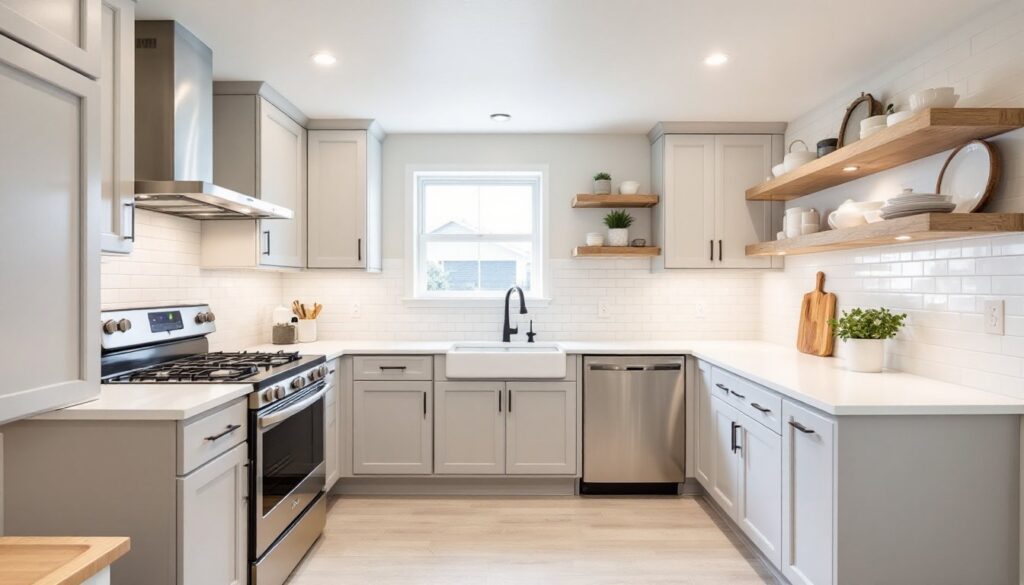
Light-colored cabinetry reflects available light and opens up the space. White, pale gray, or natural wood tones work better than dark stains. If upper cabinets feel heavy, replace some with open shelving or glass-front doors to reduce visual weight. Just be honest about whether open shelves will stay tidy, dusty clutter makes a small space feel smaller.
Use the same flooring throughout the basement to eliminate visual breaks. Luxury vinyl plank (LVP) or ceramic tile handle moisture well and come in large-format sizes that minimize grout lines. Fewer seams create a more seamless look.
For countertops, light quartz or laminate in whites, creams, or soft grays keep the palette airy. Avoid busy patterns or dark granite unless the basement has abundant natural light. A mitered edge or waterfall detail on an island or peninsula adds a custom touch without extra square footage.
Mirrors aren’t just for bathrooms. A mirrored backsplash behind the sink or cooktop doubles the light and creates the illusion of depth. Alternatively, use glossy subway tile or a metallic backsplash to bounce light around.
Keep window treatments minimal if any windows exist. A simple roller shade or no treatment at all maximizes daylight. If privacy is a concern, frosted window film works without blocking light.
Lighting Strategies for Windowless Basement Kitchens
Most basement kitchens lack windows, so artificial lighting has to work overtime. Layering different types of light prevents the space from feeling like a cave.
Start with recessed LED downlights on the ceiling, spaced about 4 feet apart. Use daylight-spectrum bulbs (5000K to 6500K) to mimic natural light and improve color accuracy when cooking. Dimmable LEDs let users adjust brightness for different tasks and moods.
Under-cabinet LED strips are non-negotiable in a windowless kitchen. They illuminate countertops for prep work and eliminate shadows cast by overhead lights. Hardwired strips look cleaner than plug-in versions, but battery-operated or plug-in options work fine for renters or DIYers avoiding electrical work.
Add a pendant light or two over a small dining table, island, or peninsula to create visual interest and define zones. Choose fixtures with clear or white glass to maximize light output.
If the basement has any daylight from a window well or egress window, position the sink or main work area nearby to take advantage of it. Even a small window can transform how the space feels during the day.
Safety note: Basement kitchens need GFCI-protected outlets near any water source, per NEC code. Install them during the lighting and electrical phase to avoid retrofit headaches later.
Budget-Friendly DIY Ideas for Basement Kitchen Makeovers
Not every basement kitchen needs a full gut-and-remodel. Strategic DIY updates can deliver a lot of function and style without contractor pricing.
Paint existing cabinets instead of replacing them. Clean surfaces with TSP (trisodium phosphate), sand lightly, prime with a bonding primer, and finish with a durable cabinet paint or hybrid enamel. New hardware, brushed nickel pulls or matte black knobs, instantly modernizes the look for under $50.
Peel-and-stick backsplash tiles made from vinyl or metal have come a long way. They’re water-resistant, easy to cut with scissors or a utility knife, and removable if the space is a rental. They won’t fool anyone up close, but from normal viewing distance, they look surprisingly decent.
Build your own open shelving using 1×10 pine boards and heavy-duty brackets rated for at least 200 pounds per pair. Stain or paint the boards to match the cabinets, and mount them directly into wall studs. Open shelves cost a fraction of upper cabinets and can be installed in a weekend.
Refinish or paint the floor if it’s concrete. Epoxy floor coatings or concrete stain create a durable, moisture-resistant surface that’s easy to clean. Prep is key: etch the concrete with muriatic acid or a diamond grinder to ensure good adhesion, then follow the product instructions carefully. Wear a respirator, gloves, and eye protection, epoxy fumes are no joke.
If cabinetry is limited, add a freestanding pantry cabinet or wire shelving unit from a home center. These are modular, budget-friendly, and easy to assemble. For ideas on small-space organization, many remodel inspiration guides offer creative storage solutions.
Upgrade the sink faucet. A new faucet with a pull-down sprayer improves function and style for $100 to $200. Most DIYers can swap a faucet in under an hour using an adjustable wrench and basin wrench. Shut off the water supply, disconnect the old faucet, and follow the manufacturer’s instructions for the new one. Keep a bucket handy, there’s always residual water in the lines.