A cramped shower stall doesn’t have to feel like a closet. The right tile choices can visually expand square footage, draw the eye upward, and turn a tight corner into a surprisingly inviting space. Tile selection in a small bathroom isn’t just about aesthetics, it’s about manipulating sight lines, managing grout joints, and creating continuity. This guide walks through proven tile strategies, from large-format slabs to strategic color placement, that give compact showers breathing room without knocking down walls.
Table of Contents
ToggleKey Takeaways
- Large-format tile (12×24 inches or larger) minimizes grout lines and creates seamless planes that visually expand small bathroom tile shower spaces without requiring wall removal.
- Vertical tile patterns and lighter colors like white or cool tones (pale gray, soft blue) reflect light and push walls back, making cramped showers feel significantly more spacious.
- Water absorption rates below 0.5% and slip resistance ratings of 0.42 DCOF or higher are essential for safety and durability in small shower installations.
- Accent walls or built-in niches with contrasting tile textures or colors provide focal points that make tight spaces feel more intentional and less claustrophobic.
- Strategic cost-saving approaches—such as tiling only the wet zone, shopping for surplus tile, and hiring professionals for waterproofing—can reduce expenses by 30–70% while maintaining quality.
Why Tile Choice Matters in Small Shower Spaces
In a shower measuring 32×32 inches or 36×48 inches, common builder-grade dimensions, every surface decision compounds. Tile size, grout line width, and reflectivity all affect how enclosed or open the space feels.
Grout lines act as visual interruptions. A 12×24-inch tile layout produces far fewer grout joints than 4×4-inch field tile, creating a cleaner plane that the eye reads as larger. Fewer seams also mean fewer moisture traps and simpler maintenance.
Material finish controls light. Glossy ceramic or polished porcelain bounces light around the enclosure, amplifying whatever natural or artificial illumination exists. Matte finishes absorb light, which can feel cozy in larger bathrooms but cave-like in a 30-square-foot shower.
Water performance isn’t negotiable. All shower tile should have a water absorption rate below 0.5% (porcelain or vitreous ceramic). Check for a PEI rating (Porcelain Enamel Institute hardness scale) of III or higher for walls, IV for floors. Slip resistance matters on shower floors, look for a dynamic coefficient of friction (DCOF) of 0.42 or greater, per ANSI A137.1.
Choosing tile for a small shower isn’t about trends, it’s about physics and perception. Get the fundamentals right, and the space works harder.
Best Tile Sizes and Patterns for Compact Showers
Scale and orientation change how the brain interprets square footage. Two identical showers tiled differently can feel a foot apart in perceived size.
Large Format Tiles for a Seamless Look
Large-format tile, anything 12×24 inches or bigger, minimizes grout lines and creates unbroken planes. A popular approach: 24×48-inch porcelain panels on walls, which can cover a standard 8-foot ceiling height with just two courses and a cut.
Installation requires a flat substrate. Large tile telegraphs every hump and dip in the underlying cement board or mortar bed. Use a straightedge to verify the wall is within 1/8 inch over 10 feet before setting tile. Lippage (edge misalignment) shows badly on big slabs.
Thinset matters. Use a large-and-heavy-tile (LHT) mortar with polymer modification. A 1/2×1/2-inch notch trowel works for most 12×24-inch tile: step up to 3/4×3/4-inch notches for anything heavier. Back-buttering (applying mortar to both substrate and tile back) ensures 95% coverage, per TCNA standards.
Rectangular tile laid horizontally widens walls. The same tile stacked vertically makes ceilings feel taller. For very small showers, a 1/16-inch grout joint with rectified (machine-cut) tile keeps seams nearly invisible. Use unsanded grout for joints that tight to avoid hazing.
Vertical Patterns to Create Height
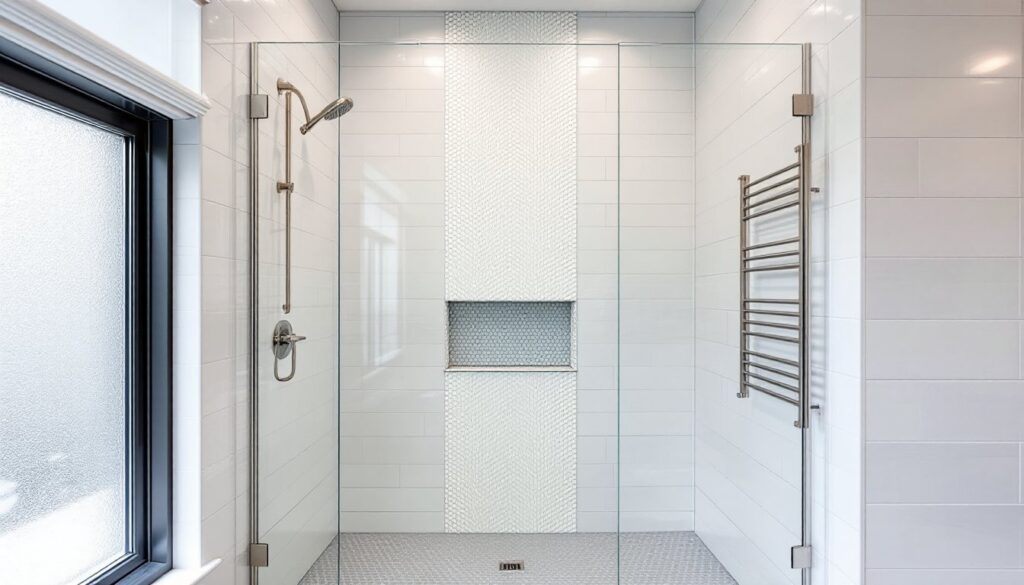
Running tile in a vertical stack bond (no offset, straight columns) pulls the eye upward and adds perceived height. It’s a cleaner, more modern look than the traditional 50% offset brick pattern.
Subway tile orientation flips the script. Classic 3×6-inch subway tile usually runs horizontally. Flip it to vertical, and suddenly a 7-foot ceiling feels closer to 8 feet. Keep the grout joint at 1/8 inch for proportion.
Vertical stripes work with any rectangular format, 4×16-inch planks, 6×24-inch panels, even 2×8-inch pencil tiles as accents. The key: uninterrupted lines from curb to ceiling. Don’t break the pattern mid-wall with a listello or border: it chops height.
Herringbone and chevron patterns can work in small showers if the tile is narrow (2×8 inches or smaller) and the color is light. These layouts add movement without overwhelming tight quarters, especially on a feature wall. Be prepared for more cuts and longer install time, plan an extra 15–20% material for waste.
Color Strategies to Open Up Your Shower
Color manipulation is the cheapest spatial trick in the book, and the most effective.
White and off-white tile reflect the most light. Bright white subway, large-format white porcelain, or glossy white ceramic all perform the same optical expansion. Pair with white or light gray grout to keep the palette cohesive. Contrasting dark grout (charcoal or black) adds drama but emphasizes every grout line, which can shrink the space visually.
Cool tones recede: warm tones advance. Pale gray, soft blue, and celadon green push walls back. Beige, cream, and warm taupe feel closer. In a 36-inch shower, even a half-step of perceived depth matters. Designers working on small space living ideas often rely on this principle to maximize compact bathrooms.
Monochromatic schemes prevent clutter. Using the same tile on walls and floors eliminates visual breaks. If the floor tile needs texture for slip resistance, keep it in the same color family. A light gray penny tile floor with matching light gray subway walls creates continuity.
Glossy finishes versus matte: Polished or glossy tile amplifies light but shows water spots and soap scum faster. Matte or satin finishes hide buildup better but absorb light. For small showers with good ventilation and regular cleaning, glossy is the better spatial choice. For lower maintenance, a satin finish splits the difference.
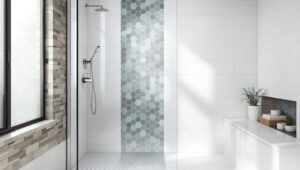
Accent color in small doses: A single vertical stripe of color, a contrasting niche, or a hex-tile floor in a muted tone adds personality without cramping the space. Avoid busy multicolor mosaics over large areas, they fragment the eye and make walls feel closer.
Creative Accent Wall and Niche Ideas
An accent wall or niche gives the eye a focal point, which paradoxically makes a small space feel more intentional and less claustrophobic.
The shower back wall (the wall opposite the showerhead) is the natural spot for a feature tile. Options include:
- Textured 3D tile: Geometric wave or relief patterns in white or light gray add depth without color contrast.
- Waterjet mosaic: Marble or porcelain cut into intricate patterns. Keep the palette neutral, white Carrara with gray veining, or white thassos with mother-of-pearl accents.
- Slab-look porcelain: Book-matched panels that mimic marble or quartzite. Two 24×48-inch slabs can cover an entire back wall with a single vertical seam.
Built-in niches provide storage and a design opportunity. Standard niche dimensions: 12–14 inches wide, 24–30 inches tall, 3.5 inches deep (the depth of a 2×4 stud bay). Frame with schluter or PVC trim for clean edges.
Tile the niche interior with a contrasting material, hexagon mosaic, stacked stone ledger, or glass tile in a complementary color. Slope the bottom at 1/4 inch per foot toward the shower to prevent water pooling. Install the niche between studs, never cutting a load-bearing stud without adding a header.
Curb and bench accents: If the shower has a built-in bench or curb, cap it with a different tile, natural stone, large-format porcelain, or wood-look tile. Bullnose or schluter trim keeps edges safe and finished. Projects featured on platforms like Remodelista often highlight terrazzo or contrasting matte tiles for visual interest in compact showers.
Ceiling tile: Tiling the ceiling (yes, the ceiling) in a small shower creates a fully enclosed, spa-like feel. Use the same large-format tile as the walls, or a mosaic for subtle texture. Ensure the ceiling substrate is moisture-rated, cement board or Kerdi-Board, not drywall, and use a polymer-modified thinset rated for overhead application.
Budget-Friendly Tile Shower Makeover Tips
Tile showers aren’t cheap, but strategic choices stretch dollars without sacrificing quality.
Use builder-grade tile smartly. Basic white ceramic subway tile costs $1–$3 per square foot. Dress it up with high-end trim, a marble threshold, or a single row of glass accent tile at eye level. The bulk of the install stays affordable: the details add polish.
DIY-friendly tile formats: Large-format tile is faster to install (fewer pieces) but less forgiving on uneven substrates. 4×4-inch or 6×6-inch tile is slower but easier for a first-timer to keep level. Peel-and-stick tile exists for showers now, look for true waterproof peel-and-stick rated for wet areas, not the vinyl versions meant for kitchen backsplashes. Brands like Tic Tac Tiles and Clever Mosaics offer glass and aluminum options starting around $8 per square foot.
Limit the tile area. Tile only the wet zone, typically 72 inches high around the showerhead and valve wall, 48–60 inches on side walls. Paint the upper walls with moisture-resistant paint or use waterproof wall panels above the tile line. This cuts material and labor by 30–40%.
Shop surplus and remnants. Tile shops and big-box stores sell discontinued styles, overstock, and remnant pallets at 50–70% off. A small shower needs roughly 75–100 square feet of tile (walls, floor, curb): one or two surplus boxes can cover the job. Browsing ideas on sites like Homify can spark inspiration for mixing budget materials creatively.
Refinish instead of replace. If existing tile is structurally sound but ugly, consider epoxy tile paint or reglazing. Rust-Oleum Tub & Tile and Homax Tough as Tile offer DIY kits for $25–$50. Surface prep is critical, clean with TSP, sand glossy surfaces with 400-grit paper, and apply in thin coats. Durability tops out around 3–5 years with careful maintenance, but it’s a fraction of a full retile.
Rent tools. A wet tile saw rents for $40–$60 per day at most home centers. For a weekend DIY install, that beats buying a $150 saw. You’ll also want a notched trowel ($8–$15), grout float ($6–$10), tile spacers ($5), and a snap cutter for straight cuts ($25–$40 to buy, or included with saw rental).
Hire for the critical steps. Waterproofing (Kerdi membrane, RedGard liquid, or mortar-bed install) is where most DIY failures happen. If budget allows, hire a tile setter for the substrate prep and waterproofing, then DIY the tile setting and grouting. Expect to pay $500–$1,000 for professional waterproofing in a small shower, cheap insurance against mold and rot.