Stairs take more abuse than nearly any other surface in your home, constant foot traffic, pets scrambling up and down, kids dropping toys mid-climb. Yet they’re often an afterthought when it comes to flooring decisions. That’s a missed opportunity. The right stair flooring doesn’t just protect treads and reduce noise: it anchors your home’s aesthetic, boosts safety, and can even increase resale value. Whether you’re renovating a creaky builder-grade staircase or freshening up a worn runner, the material you choose needs to balance durability, traction, and visual impact. This guide walks through proven flooring options, from classic hardwood to creative mixed-material designs, along with the practical trade-offs, installation realities, and safety features that matter.
Table of Contents
ToggleKey Takeaways
- The right stair flooring ideas balance durability, traction, and visual impact while anchoring your home’s aesthetic and potentially increasing resale value.
- Hardwood stair flooring remains the gold standard for timeless elegance and refinishability, though traction issues require textured finishes, grip strips, or carpet inserts.
- Carpet runners and full-coverage options provide excellent noise reduction and safety for households with children and pets, but require replacement every 7–12 years.
- Luxury vinyl plank (LVP) and laminate offer budget-friendly alternatives with a hardwood look, though neither material is refinishable once damaged.
- Traction is non-negotiable for safety—test all stair flooring materials in socks and shoes, and consider adhesive tread strips, embedded nosing, or textured finishes to prevent slips.
- Creative alternatives like tile, painted stairs, and mixed materials can inject personality, but ensure transitions are flush and verify that changes don’t trigger building permits.
Why Stair Flooring Matters for Your Home
Stair flooring serves three non-negotiable functions: safety, durability, and design continuity. Unlike level floors, stairs demand materials that provide traction under varied conditions, wet feet from a shower, socks on hardwood, or shoes tracking in snow.
From a structural standpoint, treads (the horizontal surface you step on) and risers (the vertical face) endure concentrated impact. A material that works fine in a hallway might chip, dent, or wear prematurely on stairs. Building codes (IRC R311.7) specify minimum tread depth (10 inches) and maximum riser height (7¾ inches), but they don’t dictate finish materials, that’s your call.
Visually, stairs connect floors and often sit in high-visibility zones: entryways, open-concept living areas, or hallways that frame first impressions. Mismatched or dated stair flooring disrupts flow. Coordinating your stair material with adjacent flooring, or intentionally contrasting it, creates a deliberate design statement rather than an accidental eyesore.
Finally, noise matters. Hardwood stairs without padding broadcast every footfall. Carpet or underlayment drastically cuts sound transmission, a key consideration in multi-story homes or rentals.
Hardwood Stair Flooring: Timeless Elegance
Hardwood remains the gold standard for stair flooring, durable, refinishable, and compatible with nearly any interior style. Oak, maple, and hickory are workhorse species: walnut and cherry deliver richer tones but dent more easily.
Installation typically involves retrofit treads (¾-inch-thick prefinished or site-finished boards) that overlay existing stringers, or stair nose molding if you’re matching hardwood from adjacent rooms. Expect to pay $50–$150 per tread installed, depending on species and labor rates. Prefinished treads save time but limit stain customization: site-finished treads require sanding, staining, and multiple polyurethane coats, adding days to the project.
Traction is the hardwood stair’s Achilles’ heel. Polished wood is slick, especially in socks. Options to improve grip include:
- Textured finishes: Wire-brushed or hand-scraped surfaces provide subtle tooth.
- Stair tread covers: Adhesive-backed rubber or transparent grip strips (often used in commercial settings).
- Carpet inserts: Narrow runners bordered by exposed wood edges.
Maintenance involves sweeping grit (which acts like sandpaper underfoot) and occasional recoating. The ability to sand and refinish worn treads extends lifespan to decades, a major advantage over non-renewable materials.
One caution: open-riser stairs (no riser boards) look striking with hardwood but amplify noise and aren’t ideal for households with small children or pets.
Carpet Runners and Full Coverage Options
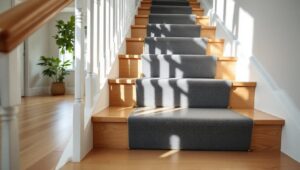
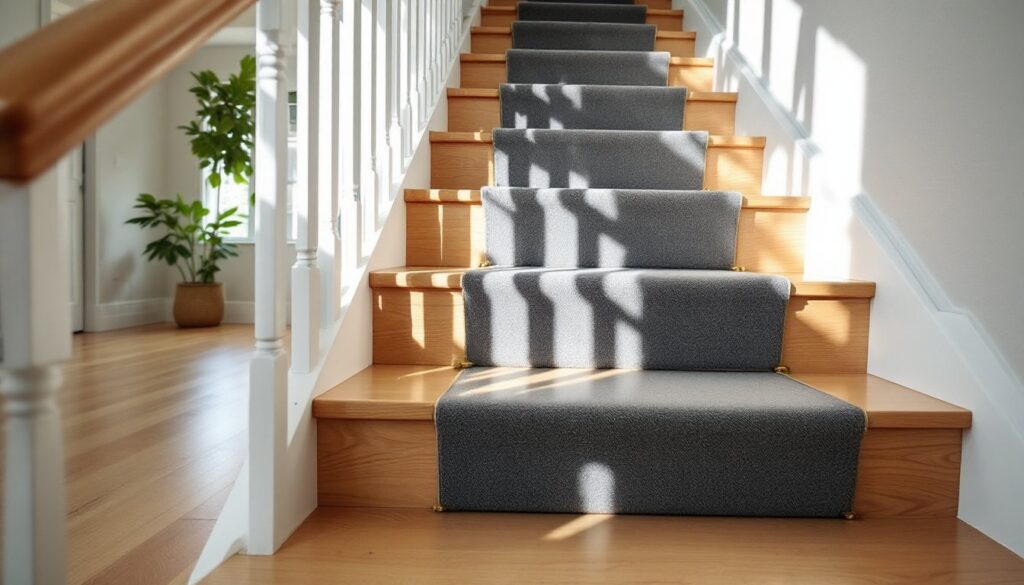
Carpet softens stairs acoustically and physically, critical if you’ve got toddlers learning to navigate steps or want to muffle second-floor foot traffic. Two installation styles dominate: runners (a centered strip leaving hardwood or painted edges exposed) and full coverage (wall-to-wall).
Runners offer design flexibility. Standard widths run 27 to 36 inches: you’ll secure them with stair rods (decorative but functional metal bars at each riser) or tack strips and padding. Runners suit transitional or traditional homes and simplify replacement, yank the old one, install new, no floor refinishing.
Full-coverage carpet maximizes comfort and safety. Frieze, textured loop, or cut-pile nylon in tight, dense weaves resist matting under heavy use. Avoid plush or shag: they compress quickly and reduce traction. Padding matters: use ½-inch rebond or memory foam rated for stairs (not the thick stuff from living rooms, which can shift underfoot).
Installation is a pro job unless you’re comfortable with a knee kicker and precise cuts around newel posts and balusters. Expect $300–$800 for a standard 13-step staircase with mid-grade nylon and padding.
Carpet’s downside? It’s a consumable. High-traffic edges fray, stains happen, and pet accidents penetrate padding. Budget for replacement every 7–12 years. If you’re renting out the property or have allergies, hardwood or LVP might pencil out better long-term.
Luxury Vinyl and Laminate for Budget-Friendly Durability
Luxury vinyl plank (LVP) and laminate bring the hardwood look without the hardwood price or maintenance. Both are DIY-friendly, moisture-resistant, and available in convincing wood-grain visuals.
LVP (especially rigid-core SPC or WPC formulations) handles moisture better than laminate, making it suitable for basement stairs or homes in humid climates. Stair-nose molding (bullnose edging) is critical, it conceals cut edges and prevents tripping. Some manufacturers offer coordinating stair treads precut to standard depths, simplifying layout.
Laminate scratches more easily but costs less ($2–$4/sq ft vs. $4–$7 for quality LVP). Both require underlayment for sound dampening: skipping it turns stairs into drumheads.
Installation involves either flush-mount treads (LVP/laminate glued or nailed directly to existing treads) or cap-a-tread systems (retrofit treads that overhang and cover old stair nosings). The latter suits remodels where you’re not tearing out old flooring. Many homeowners find detailed project walkthroughs helpful for navigating tricky cuts around spindles.
Limitations: Neither material is refinishable. Once scratched or gouged, you’re replacing the plank. Also, cheaper laminate can feel hollow underfoot, pay up for denser cores (AC3 rating minimum for stairs).
Creative Alternatives: Tile, Painted Stairs, and Mixed Materials
If hardwood, carpet, and LVP feel too predictable, consider these approaches:
Tile (ceramic, porcelain, or natural stone) suits outdoor stairs, basement access, or modern/Mediterranean interiors. Porcelain with a matte or textured finish provides essential slip resistance: polished marble or glazed ceramic is dangerously slick. Use bullnose edge tiles or metal stair nosing for clean transitions. Tile is cold, hard, and unforgiving if you fall, best reserved for low-traffic or climate-appropriate applications.
Painted stairs offer the cheapest aesthetic overhaul. Sand treads to bare wood, prime with bonding primer (critical for adhesion under foot traffic), and apply porch and floor enamel in satin or semi-gloss. Two coats minimum. Add a polyurethane topcoat for durability, or use specialty stair paint with grit mixed in for traction. Paint wears fastest at tread edges: plan to touch up annually. Bold patterns, stripes, stenciled runners, ombre gradients, work if your décor skews eclectic, but resale appeal drops outside certain markets.
Mixed materials combine, say, hardwood treads with painted or wallpapered risers, or carpet runners over stained wood. This approach adds visual interest and lets you experiment without full commitment. Ensure transitions are flush to avoid tripping hazards, and use materials with similar expansion rates if you’re mixing wood species or synthetics.
For cost-conscious renovations, reviewing budget breakdowns helps set realistic expectations before diving into creative finishes.
Safety Features and Practical Considerations
Traction is non-negotiable. The IRC doesn’t mandate specific slip-resistance ratings, but common sense does. Options include:
- Adhesive tread strips: Clear or colored grit tape along the nose of each tread.
- Embedded nosing: Metal or rubber inserts mortised into the tread edge (common in commercial installs).
- Textured finishes: Wire-brushed wood, matte tile, frieze carpet.
Test materials in socks and shoes: if it feels sketchy in the showroom, it’ll be worse at home.
Lighting dramatically improves safety. LED strip lights recessed under stair nosings or along stringers eliminate shadows without harsh overhead glare. Low-voltage tape lights run about $30–$60 for a typical staircase and install with adhesive backing and a plug-in transformer, no electrician required for basic setups, though hardwired systems may need NEC-compliant junction boxes.
Handrails and balusters aren’t flooring, but they’re part of the safety ecosystem. IRC requires handrails on at least one side for stairs with four or more risers: graspable diameter should be 1¼ to 2 inches. If you’re renovating flooring, verify that new tread thickness doesn’t alter baluster heights or handrail clearance.
Permits: Purely cosmetic stair flooring (replacing carpet with hardwood, painting treads) typically doesn’t require permits. Structural changes, altering tread depth, riser height, or stringer configuration, do. When in doubt, call your local building department before ordering materials.
Conclusion
Choosing stair flooring comes down to balancing aesthetics, durability, and safety within your budget and skill level. Hardwood offers longevity and refinishability: carpet delivers comfort and sound control: LVP and laminate split the difference with lower maintenance. Creative finishes, tile, paint, mixed materials, inject personality but demand careful execution. Whatever route you take, prioritize traction, use quality underlayment or padding, and don’t skip prep work. Stairs aren’t the place to cut corners or rush the install. Done right, new stair flooring transforms daily traffic into a design feature that holds up for years.