Bathroom flooring takes a beating. Between splashes, humidity, temperature swings, and foot traffic, it’s one of the hardest-working surfaces in a home. Tile remains the go-to choice for a reason: it’s waterproof, durable, and available in a staggering range of styles, from classic subway patterns to oversized slabs that mimic marble. Whether someone’s tackling a full remodel or refreshing a half-bath, the right tile can elevate the space while standing up to daily wear. This guide covers practical, proven tile flooring ideas that balance aesthetics with real-world performance.
Table of Contents
ToggleKey Takeaways
- Tile flooring ideas for bathroom range from classic ceramic and porcelain to modern large-format designs, all offering superior water resistance, durability, and long-term value compared to vinyl or laminate.
- Large-format tiles (12×24 inches or larger) create a seamless, contemporary look with fewer grout lines, making them ideal for minimalist bathrooms, though they require a perfectly flat substrate and professional cutting.
- Natural stone tiles like marble, travertine, and slate deliver luxury aesthetics and unique character but demand more maintenance, including regular sealing every 6–12 months depending on use.
- Budget-conscious homeowners can achieve stylish tile flooring by mixing basic field tiles with small sections of accent tile, choosing light colors like white or gray, or exploring sales on overstock tiles.
- Patterned options such as subway, hexagon, and mosaic tiles add visual interest without relying on bold colors, with smaller mosaic tiles offering better grip for shower floors.
- Proper installation on a cementitious backer board with quality grout and sealant ensures tile floors last decades while resisting bathroom moisture, temperature swings, and foot traffic.
Why Tile Is the Perfect Choice for Bathroom Floors
Tile checks every box for bathroom flooring: water resistance, ease of cleaning, and longevity. Unlike vinyl or laminate, properly installed tile won’t warp or delaminate in high-moisture environments. Porcelain and ceramic tiles are virtually impervious to water when paired with the right grout and sealant.
From a practical standpoint, tile handles the temperature fluctuations bathrooms see better than most materials. It won’t expand or contract like wood or buckle under a steam shower. Maintenance is straightforward, mop with a pH-neutral cleaner, reseal grout annually, and the floor will last decades.
Tile also offers design flexibility. It comes in countless shapes, sizes, colors, and textures, so it works in everything from a farmhouse powder room to a minimalist spa bath. For resale value, tile signals quality and permanence to buyers. A well-executed tile floor doesn’t just function, it anchors the room’s entire aesthetic.
Classic Ceramic and Porcelain Tile Designs
Ceramic and porcelain tiles remain workhorses for bathroom floors, and for good reason. Ceramic is budget-friendly and easier to cut, making it a solid choice for DIYers. Porcelain is denser, harder, and more water-resistant, ideal for high-traffic or wet areas. Both come in glazed finishes that resist stains and simplify cleaning.
Classic formats include 12×12-inch or 6×6-inch squares in neutral tones, white, beige, gray. These tiles work in traditional and transitional spaces, and their smaller size means fewer cuts around toilets and vanities. For added grip, look for tiles with a textured or matte finish: polished surfaces can get slippery when wet.
Color and pattern options have expanded. Manufacturers now offer ceramic and porcelain tiles that mimic wood planks, concrete, or even fabric textures. A popular approach is pairing a simple field tile with a decorative border or accent strip at the threshold. Keep grout lines narrow (1/16 to 1/8 inch) for a cleaner look, and use epoxy grout in showers or near tubs to prevent mildew.
Ceramic and porcelain tile installations typically require a cementitious backer board over the subfloor to prevent flexing and cracking. This adds about 1/2 inch to floor height, so plan transitions to adjacent rooms accordingly.
Modern Large-Format Tiles for a Sleek Look
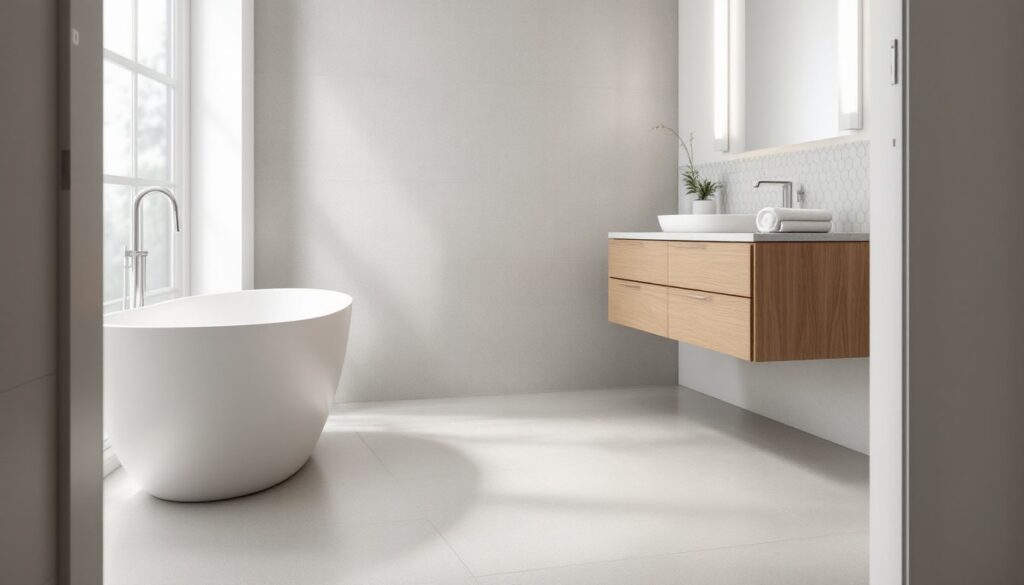
Large-format tiles, anything 12×24 inches or bigger, create a seamless, contemporary feel by minimizing grout lines. Popular sizes include 24×24, 12×24, and 24×48 inches. Fewer grout lines mean less maintenance and a visually expanded floor, which is a win in smaller bathrooms.
These tiles are almost always porcelain, which offers the strength needed to span larger areas without cracking. Installation requires a perfectly flat substrate: any dips or humps will telegraph through the tile or cause lippage (edges that don’t sit flush). Use a self-leveling underlayment if the subfloor isn’t dead flat.
Cutting large-format tiles takes more planning. A wet saw with a sliding table is essential, handheld tile cutters won’t handle the size or thickness. Budget extra time for layout: with fewer tiles in play, each cut and placement is more visible. Many pros recommend a 1/8-inch grout line to allow for slight size variations while keeping the look tight.
Large-format tiles shine in open-concept bathrooms or spaces with modern fixtures. Pair them with frameless glass showers and wall-mounted vanities to amplify the minimalist vibe. For slip resistance, choose a tile with a COF (coefficient of friction) rating of 0.6 or higher.
Timeless Patterns: Subway, Hexagon, and Mosaic Tiles
Patterns bring character without relying on bold color. Subway tile, typically 3×6 inches, laid in a running bond (brick pattern) is a bathroom staple. Originally a wall tile, it works on floors when installed in porcelain or unglazed ceramic for traction. The elongated shape creates a sense of movement and pairs well with vintage or industrial styles.
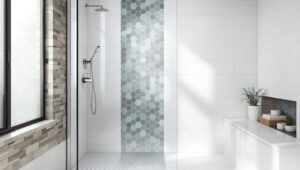
Hexagon tiles, often called hex tiles, come in sizes from 1-inch mosaics to 8-inch individual tiles. The six-sided shape adds visual interest and works in both retro and modern settings. Small hex mosaics (typically sold on 12×12-inch mesh sheets) are excellent for shower floors or to define a wet area, as the increased grout lines provide better grip.
Mosaic tiles, small tiles arranged in patterns, offer endless customization. Common materials include ceramic, glass, and stone, with glass mosaics adding a reflective, jewel-like quality. They’re labor-intensive to install but make a statement in smaller doses, like a border or inset panel.
For patterned tiles, layout matters. Dry-fit the entire floor before mixing thinset to ensure the pattern centers correctly and cuts fall in less visible areas. Use unsanded grout for mosaic tiles with tight joints (less than 1/8 inch) to avoid scratching the tile surface.
Natural Stone Tile Options for Luxury Bathrooms
Natural stone, marble, travertine, slate, and limestone, brings texture, color variation, and a high-end feel. Each piece is unique, so the floor will have organic shifts in tone and veining. Stone requires more upkeep than porcelain but delivers a look that’s hard to replicate.
Marble is the classic luxury choice. Carrara and Calacatta varieties offer white to gray backgrounds with distinctive veining. Marble is softer than porcelain and can etch or stain if not sealed regularly (every 6 to 12 months depending on use). Opt for honed or tumbled finishes rather than polished to improve slip resistance.
Travertine has a pitted, earthy surface that works in Mediterranean or rustic designs. It’s more porous than marble, so sealing is non-negotiable. Slate offers a darker, moodier palette, grays, blacks, greens, with a naturally textured surface that provides excellent traction. It’s durable and lower-maintenance than marble.
Stone tiles are sold in both gauged (uniform thickness) and ungauged formats. Gauged tiles simplify installation. Expect to pay $8 to $20+ per square foot for materials, depending on the stone type and grade. Stone is heavier than ceramic, so ensure the subfloor can handle the load, most residential floors are fine, but check joist spacing if installing over a crawlspace.
Stone installation often requires a mud-set method (mortar bed) for best results, though thin-set over backer board works for gauged tiles. Hire a pro if the budget allows: stone’s cost and quirks make DIY mistakes expensive.
Budget-Friendly Tile Ideas That Don’t Compromise Style
A tight budget doesn’t mean settling for boring tile. Standard ceramic tiles in 12×12-inch or 6×6-inch sizes run $0.50 to $3 per square foot, and many manufacturers offer stylish colors and finishes at that price point. White or light gray tiles keep costs down and work in nearly any design scheme.
Peel-and-stick vinyl tiles have improved dramatically and can mimic the look of ceramic or stone. They’re not as durable or water-resistant as real tile, but for a powder room or rental, they’re a fast, affordable option (under $2 per square foot). Install them over smooth, clean subfloor and avoid areas with standing water.
Another budget move: use basic field tiles for most of the floor and splurge on a small section of accent tile, a decorative border, a hexagon inset near the vanity, or a runner of patterned tile. This approach keeps material costs low while adding visual interest.
DIY installation saves the most money. Tile labor often costs as much as or more than materials. With a wet saw rental (around $50 to $75 per day), notched trowel, tile spacers, and patience, a motivated DIYer can tile a small bathroom over a weekend. Watch for sales at home centers: overstock and discontinued tiles can drop to 50% off.
Many home design platforms showcase budget bathroom transformations that rely on smart tile choices, proving style doesn’t require a luxury price tag.
Conclusion
Tile flooring delivers performance and style in bathrooms, whether the project calls for classic ceramic, sleek large-format porcelain, or luxurious natural stone. The key is matching the tile to the space’s needs, moisture levels, traffic, and design goals, while respecting the budget and skill level required for installation. With proper prep, quality materials, and attention to detail, a tiled bathroom floor will look sharp and hold up for decades.