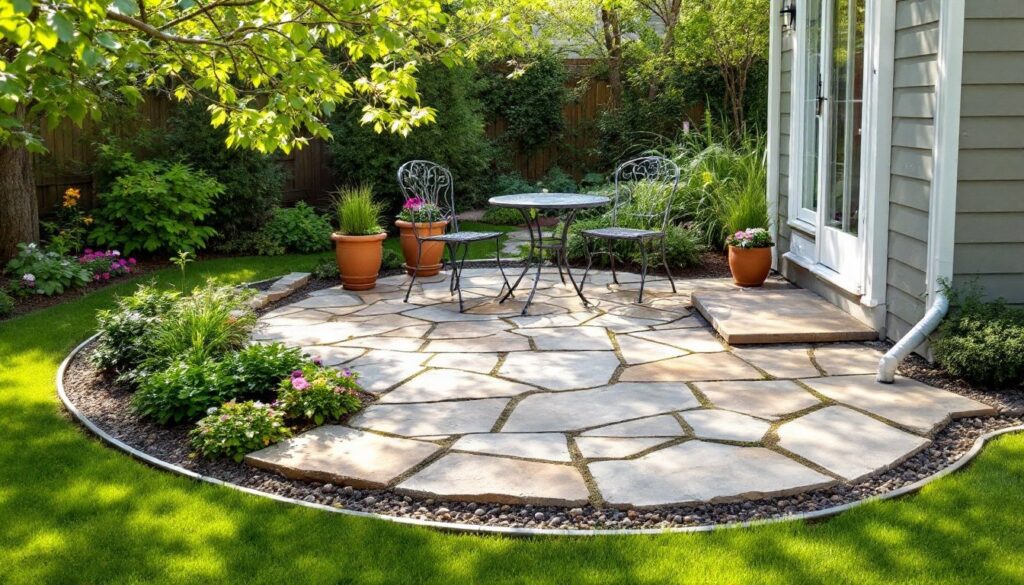
A small backyard doesn’t mean sacrificing style or function. Flagstone patios pack outsized charm into tight spaces, offering natural beauty and durability without the concrete-slab monotony. Whether working with a 6×8 foot side yard or a narrow courtyard, flagstone adapts to irregular shapes and grades better than poured surfaces.
This guide walks through practical design ideas, from circular layouts to mixed-material approaches, plus installation tips that keep costs manageable and results professional. Time to turn that neglected patch of dirt into a usable retreat.
Table of Contents
ToggleKey Takeaways
- Small flagstone patio ideas work perfectly for tight spaces because irregular stone shapes fit together like puzzle pieces, reducing waste and accommodating curves better than rigid poured surfaces.
- Circular or curved flagstone layouts soften property lines and make compact 10×10 foot spaces feel intentional, while mixed-material designs with gravel or grass can cut material costs by 30 to 40 percent.
- Irregular flagstone patterns hide minor leveling mistakes, require less precision cutting than geometric grids, and create a natural, organic appearance that blends seamlessly with woodland or cottage garden settings.
- DIY flagstone patio installation can cost under $600 for small patios when sourcing local second-grade or tumbled stone, which has cosmetic flaws but functions identically to premium stock.
- Proper base preparation with 3/4-inch crushed stone compacted in 2-inch lifts and polymeric sand for joints is essential for stability, while furnishing with bistro seating and vertical container plants maximizes usability without overwhelming compact layouts.
Why Flagstone Is Perfect for Small Patio Spaces
Flagstone handles spatial challenges that stump rigid pavers. Its irregular shapes nest together like puzzle pieces, reducing waste and accommodating curves or tight corners. Each stone spans 1 to 4 square feet on average, making layout adjustments easier than fiddling with dozens of small pavers.
The material itself, typically sandstone, bluestone, or limestone, ages gracefully in all climates. Unlike stamped concrete, flagstone won’t show surface cracks as dramatically. Thickness runs 1 to 2 inches for most patio-grade stone, providing stability without excessive weight on shallow base layers.
Small patios benefit from flagstone’s texture variance. Light and dark tones within a single pallet create visual interest that makes compact spaces feel larger. The rough, non-slip surface works well near pools or in shaded areas prone to moss (though regular cleaning still matters).
Permit requirements for non-mortared flagstone patios are minimal in most jurisdictions, you’re not altering drainage or building a structure. Always check local codes, but expect a simpler process than deck or pergola projects.
Circular Flagstone Patio Designs for Cozy Gatherings
A circular or curved layout softens harsh property lines and makes a 10×10 foot space feel intentional rather than leftover. Start by marking the perimeter with landscape paint or a garden hose, then work inward with progressively smaller stones.
Place the largest flagstones around the outer ring, cutting or fitting smaller pieces toward the center. This approach minimizes visible gaps and creates a natural focal point, ideal for a fire pit or bistro table. Use a 4-inch crushed stone base topped with 1 inch of coarse sand for stability. Compact each layer with a plate compactor (rent one for about $60/day).
Curved edges disguise the patio’s true footprint. Visitors perceive the space as larger because sight lines avoid abrupt 90-degree stops. Border the circle with low-growing groundcover like creeping thyme or Irish moss to blur boundaries further.
For seating, a built-in stone bench along part of the curve eliminates the need for bulky furniture. Stack 6×6 inch capstones on a gravel base, mortaring the top layer for safety. Two people can handle this in a weekend, though cutting stones to follow the arc requires a wet saw with a diamond blade, worth borrowing or renting if you’re tackling more than a few cuts.
Mixed Material Patios: Combining Flagstone with Gravel or Grass
Blending flagstone with pea gravel or grass strips stretches both budget and visual appeal. Lay stones 2 to 4 inches apart, filling gaps with 3/8-inch pea gravel or decomposed granite. This “stepping stone” style cuts material costs by 30 to 40 percent while maintaining full usability.
Gravel also improves drainage, critical in clay soils or low-lying yards. Spread landscape fabric beneath the gravel to block weeds without choking water flow. Rake and top-dress the gravel annually: foot traffic compacts it over time.
For a softer look, plant grass or moss between stones. This works best in mild climates with consistent moisture. Choose a low-maintenance turf like buffalo grass or fine fescue, keeping gaps at least 3 inches wide to allow root growth. Expect to edge and trim more often than with gravel, but the payoff is a patio that feels integrated with the lawn rather than plopped on top of it.
According to outdoor living experts, mixed-material patios suit cottage and informal garden styles particularly well. The technique also lets homeowners stage construction, install half the flagstone one season, assess the layout, then finish the following year.
Irregular Flagstone Patterns for Natural, Organic Appeal
Irregular or “crazy paving” patterns embrace flagstone’s natural shapes rather than fighting them. This method requires patience during layout but demands less precision cutting. Dry-fit all stones before setting them, shifting pieces to minimize joint width and create a balanced color mix.
Start with the largest, flattest stones as anchors, placing them roughly 4 to 6 feet apart. Fill between anchors with medium stones, then wedge small pieces into remaining gaps. Aim for joints between 1/2 inch and 2 inches, wide enough for polymeric sand or plantings, narrow enough to prevent wobbling.
Irregular patterns hide minor leveling mistakes better than geometric grids. If one stone sits 1/4 inch high, the eye reads it as character, not error. That said, use a 4-foot level and rubber mallet to check each stone as you go. High spots cause tripping: low spots collect water.
This style shines in shaded or woodland settings where formality would clash. Pair it with ferns, hostas, or native wildflowers planted in the widest joints. The patio reads as an extension of the landscape rather than an imposition on it.
Cutting irregular shapes is easier with an angle grinder fitted with a diamond blade rather than a wet saw. Mark cut lines with chalk, score both sides, then snap the stone over a board edge. Wear safety goggles, hearing protection, and a dust mask, silica dust from dry cutting is a serious respiratory hazard.
Budget-Friendly DIY Flagstone Patio Installation Tips
Flagstone costs $15 to $30 per square foot installed, but DIY labor cuts that nearly in half. Shop for “select” or “#1” grade stone at landscape supply yards rather than big-box stores, quality is more consistent, and bulk discounts apply. A pallet covers roughly 100 to 120 square feet depending on thickness.
Skip the mortar bed unless codes or soil conditions demand it. A dry-laid patio on compacted base performs well in most climates and allows easy future adjustments. You’ll need crushed stone (3/4-inch minus) for the base, coarse sand for leveling, and polymeric sand for joints. Budget about $3 to $5 per square foot for base materials.
Rent a plate compactor for base prep, hand tamping won’t achieve proper density. Compact in 2-inch lifts, wetting each layer slightly to aid consolidation. The base should extend 6 inches beyond the patio perimeter to prevent edge slumping.
Interior designers using budget flagstone techniques report total costs under $600 for small patios when sourcing local stone. Regional availability matters, bluestone is affordable in the Northeast but pricey in the Southwest, where sandstone dominates.
Ask suppliers about second-grade or tumbled stone. These have cosmetic flaws or rounded edges but function identically to premium stock. For a 10×10 foot patio, switching to second-grade can save $200 to $400.
Plan for 10 percent overage when ordering. Breakage, fitting mistakes, and future repairs consume extra material. Leftover stone works for garden edging or stepping stones elsewhere in the yard.
Enhancing Your Small Flagstone Patio with Furniture and Plants
Furnishing a small flagstone patio requires editing. A bistro table and two chairs provide dining space without crowding. Folding or stackable pieces let you reclaim square footage when entertaining. Avoid heavy sectional sofas, they overwhelm compact layouts and trap moisture against the stone.
Choose furniture legs with broad footprints. Narrow chair legs punch through sand-filled joints and wobble. Metal or resin pieces with flat bases distribute weight better than spindly wood legs.
Container plants add vertical interest without consuming floor space. Cluster three to five pots of varying heights in one corner rather than scattering singles around the perimeter. Large containers (15+ gallons) anchor the grouping and reduce watering frequency. For garden planning advice, pairing ornamental grasses with trailing annuals creates year-round structure.
Lighting extends usability into evening hours. Solar path lights tucked between stones create subtle ambiance, while a string of LED café lights overhead defines the space. Run electrical lines before laying flagstone if planning permanent fixtures, retrofitting is a headache.
Edging materials frame the patio and prevent base migration. Steel landscape edging (1/8-inch thick) flexes to follow curves and sits flush with mowers. Soldier course bricks (bricks set vertically) offer a traditional look but add 4 inches to the footprint. Either way, edging is optional for dry-laid patios, many installers rely on gravel borders or plantings alone.
For privacy in tight quarters, consider a trellis with climbing vines along one side. A 6-foot panel doesn’t require footings if properly braced and adds vertical green space without shrinking the patio floor.
Conclusion
Small flagstone patios deliver durability and character without monopolizing the yard or the budget. Whether opting for a circular design, mixed materials, or irregular paving, the keys are proper base prep and patient layout. Tackle the project over a few weekends, source materials locally, and don’t shy away from second-grade stone, it weathers just as well as premium stock. With thoughtful furnishing and strategic planting, even a 6×8 foot flagstone patio becomes a true outdoor room.